
Tension between the United States and Iran has escalated again in recent hours in a climate of growing international uncertainty, marked by diplomatic warnings, military movements in the Middle East and new political sanctions from Washington against Tehran. All just a few days before a new round of nuclear negotiations scheduled for next Monday in Vienna.
Concern about a possible US attack against the Islamic Republic increased throughout the day this Friday, despite the fact that both parties keep diplomatic channels open after the third round of contacts held on Thursday in Geneva. At that meeting, representatives from Washington and Tehran noted certain progress, although they acknowledged that substantial differences persist.
The Iranian Foreign Minister, Abbas Araqchí, assured that the positions “have become closer”, but admitted that there are still relevant disagreements. The next meeting will take place in Vienna, headquarters of the International Atomic Energy Agency (IAEA), in charge of supervising the Iranian nuclear program.
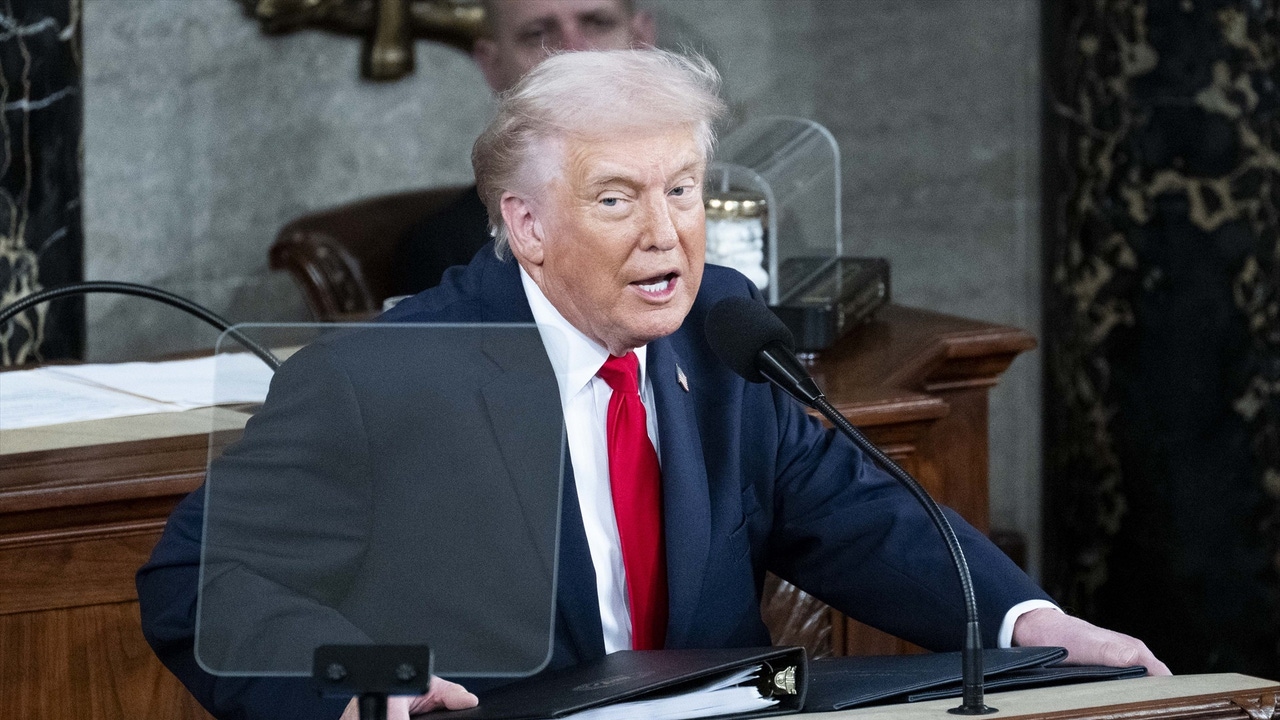
However, US President Donald Trump declared from the White House that his Government is not satisfied with the development of the talks. Although he stated that he has not made a “final decision” on a possible attack, he insisted that Iran “cannot have nuclear weapons” and announced new additional talks without offering details.
In indirect negotiations held throughout 2026, Washington demands that Iran stop uranium enrichment and limit the range of its ballistic missiles, demands that Tehran rejects. Iranian authorities condition any additional restrictions on their atomic program on the lifting of economic sanctions.
UN Secretary General António Guterres urged both parties to maintain diplomatic channels and called for a “full and exhaustive” verification by the IAEA. The international organization recalled that since the attacks by Israel and the United States on Iranian nuclear facilities in June 2025, it has not received access or complete information about the most sensitive aspects of the program.
International warnings and departure of citizens
The political tension had an immediate reflection in the diplomatic field. Throughout Friday, several countries recommended their citizens leave Iran or avoid traveling to the region, in a constant trickle of official advisories.
The United States, which does not have an embassy in Iran, authorized the departure of non-essential personnel and family members from Israeli territory. The United Kingdom withdrew its diplomatic staff from Iran, while China urged its citizens to leave the country as soon as possible and reinforce its security measures.
Italy asked its nationals to leave Iran and advised against traveling to Iraq and Lebanon. France recommended not traveling to Israel, Jerusalem and the West Bank. Germany and Finland issued similar advisories regarding Israel and the Palestinian territories. Spain, for its part, had already advised against traveling to Israel on February 3 due to the “situation of regional instability.”
Military deployment and new designation against Tehran
The diplomatic escalation coincides with a notable US military reinforcement in the region. The USS Gerald R. Ford aircraft carrier, considered the largest in the world, arrived near the Israeli coast as part of the largest US naval deployment in the Middle East since the invasion of Iraq in 2003. It joins the USS Abraham Lincoln, present in the Persian Gulf since early January, both accompanied by their respective combat groups and supported by dozens of planes and resupply aircraft.
In this context of tension, Washington also announced the inclusion of Iran in a new list of countries that commit arbitrary detentions. The designation makes the Islamic Republic the first “State sponsoring unjust detentions”, a category created by Trump through an executive order signed last September.
Marco Rubio justified the measure by demanding the release of all Americans detained in Iran and accused the Iranian regime of using foreign citizens as a tool of political pressure. He also recalled the taking of hostages at the US embassy in Tehran in 1979 and warned that, if these practices continue, the United States could invalidate US passports to travel to Iran or stopover in that country.
While diplomatic warnings, cross-threats and military movements continue, the meeting scheduled for Monday in Vienna is presented as a critical point to determine if the diplomatic route manages to prevail or if the crisis enters a new phase of open confrontation.
