
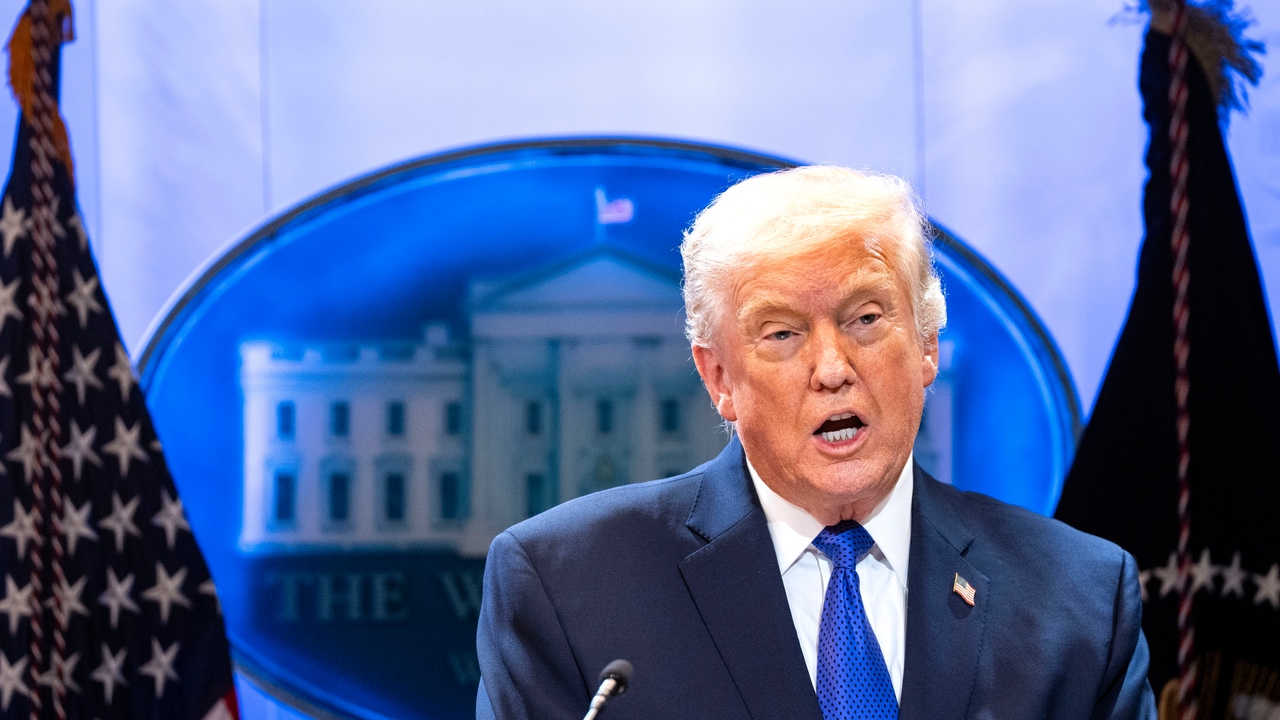
The week has not ended well at all for Donald Trump after the Supreme Court ruled this Friday against the tariffs that the president imposed last year in an appearance in which Trump appeared with a very analog sign in which he detailed what tariff he would impose on each country.
The judges have said that it is not legal because it appealed to the National Emergency Law to be able to apply them and that is not the situation in the United States. Even conservative justices that he had appointed have voted against Trump’s measure (6-3), which represents a large majority within the court that believes that this is not in accordance with the law.
The judges’ argument
Fernando Arancón and Eduardo Saldaña explain that this is one of the few defeats that Donald Trump has had in the Supreme Court. What have the magistrates argued? That Trump is clinging to a 1977 law with some loopholes that the president takes advantage of to regulate certain foreign matters without having to go through Congress. In fact, the law itself that Trump relies on does not mention tariffs, although he later applies them.
For this reason, the Supreme Court establishes that when there are tariffs and it is not something specific or emergency and it is a structural policy, the president does have to go through Congress, which is a problem for Trump because the Congressional process is much more “burdensome.”
Trump’s reaction
The president of the United States came out as soon as he heard the news and, in a new challenge to the Supreme Court, announced global tariffs of 10% – which this Saturday would rise to 15% -, in addition to attacking the judges.
“I am allowed to cut off any trade. I can destroy trade, I can destroy the country, I am even allowed to impose an embargo that destroys a foreign country. I can do whatever I want to them. I am allowed to destroy the country, but I cannot charge them a single dollar,” he said in some “terrible” statements, in the opinion of Julia Otero: “Although I use it as an exaggerated example, let him be able to verbalize what goes through his head when he wants to tell the world about his power.”
This is one of the keys that Eduardo and Fernando comment on: Trump tries to play a lot with force, with holes and with pressure on institutions: “Trump’s political functioning is very basic because he understands everything in relationships of force, “if I can do it, I will do it.” He has no moral or ethical brakes.”
Ultimately, what Trump is constantly looking for is what legal loophole allows him to do what he wants to do, even if he has to pressure other powers. “He believes that he has to prevail over the rest and will find new pressure holes to put pressure on Congress and the Supreme Court.”
What happens to tariffs already collected?
This is another of the problems that arise for the US Government, what to do with the tariffs that have already been collected and that amount to almost 200,000 million dollars. “Perhaps the US treasury has to return them to all those who have already paid it,” they explain.
A serious problem for the country, which at this moment is in deficit, that is, “it makes a very important hole in their accounts because that money, even if it is from the United States, is a lot of money. They have a problem managing this sentence retroactively.”
The thesis that is gaining strength: Trump’s “cape”
Eduardo explains that in the last few hours a thesis has been revealed that is gaining more and more strength regarding the real intention of the Supreme Court in declaring the tariffs illegal.
“There are those who suggest that in reality this is a cover that the Supreme Court is throwing at Donald Trump to give him a way out because the tariffs are having a very big impact on the American economy. What is happening? That you can have a defeat that falls a little on the Supreme Court, but you manage to eliminate some tariffs without having to reverse your measure yourself,” he says.
In the short term, this Supreme Court decision may give the president a very bad image, but in the medium term “it may be good for him” because he can find other formulas to relax the economic pressure on citizens and apply tariffs, but not so general.
“The Supreme Court does this because it smells blood and Trump is falling in the polls. The main thesis goes a little there,” he concludes.
