
The Israeli attack on the South Pars natural gas field and Iran’s response by bombing the Ras Laffan refinery threaten to escalate the conflict and turn it into an economic and energy war with global repercussions: “As of tonight, the red lines have changed,” Iran warned this Wednesday.
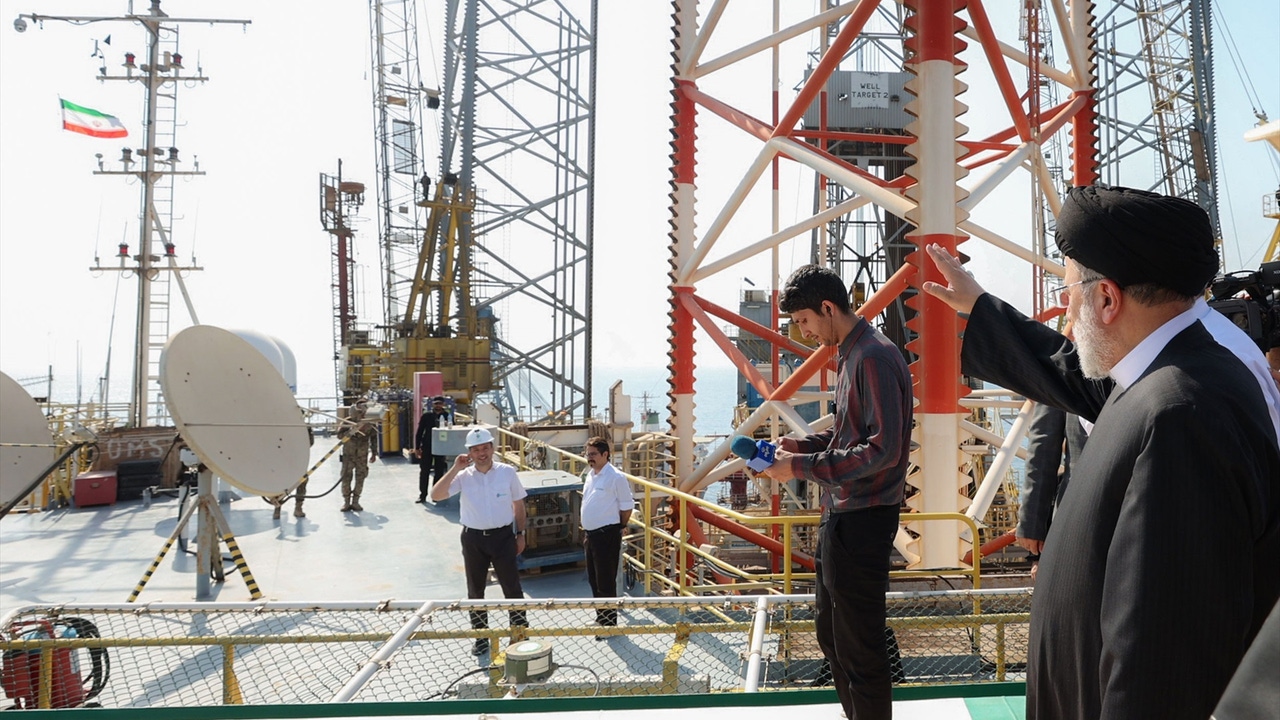
The Iranian authorities denounced this Tuesday attacks by Israel against South Pars, a reservoir controlled by Iran and Qatar that houses nearly 20% of the world’s natural gas reserves. It is the largest gas reserve in the world and represents one of Qatar’s largest sources of economic income. A day later, Iranian forces responded with bombings against the Ras Laffan refinery, the energy heart of Qatar and one of the most critical nodes in the world liquefied natural gas (LNG) market.
A “total economic” war
Tehran claimed that the conflict had gone from “limited and localized confrontations” to “a total economic war”: “If the enemy thought that with these attacks it could increase pressure on Iran to force it to give in, it has made a fatal miscalculation,” military sources warned. Faced with this situation, US President Donald Trump himself dissociated himself from the attack on South Paris and assured that Israel would not attack it again unless Iran decided to attack “innocent countries” again.
It is clear that the latest incidents have caused a change in a war that, until now, had focused solely on military infrastructure, leaving energy infrastructure aside. And this can be seen in the prices of oil and natural gas, which have skyrocketed not only due to the threat of a lack of supply, but also due to the fact that these new attacks mean a prolongation of the conflict. The fear now is that the energy markets will have to extend this price increase given the possibility that there will be no de-escalation of the conflict in the short or medium term. Natural gas has risen almost 30% this Thursday to 70 euros per megawatt hour, while crude oil has increased to $110 per barrel of Brent.
The risks of the “dangerous” drift of war
Countries have warned of the risks posed by this situation. Qatar has described Israel’s maneuver as “dangerous and irresponsible”, while calling it a threat to “global energy security”: “Attacking energy infrastructure constitutes a threat to global energy security, as well as to the peoples of the region and their environment,” stressed the Qatari Foreign Ministry spokesperson, who has asked to “avoid attacks on vital installations.”
These attacks have further deepened, if possible, the economic impact of the conflict worldwide, with a situation already critical as a result of Iran’s blockade of the Strait of Hormuz – responsible for 20% of global crude oil exports – and whose closure means that, every day, some 20 million barrels of crude oil are left unable to access the global market.
