
Conflicts have always been common on the border between Pakistan and Afghanistan due to a route imposed by British colonialism, which divided communities.
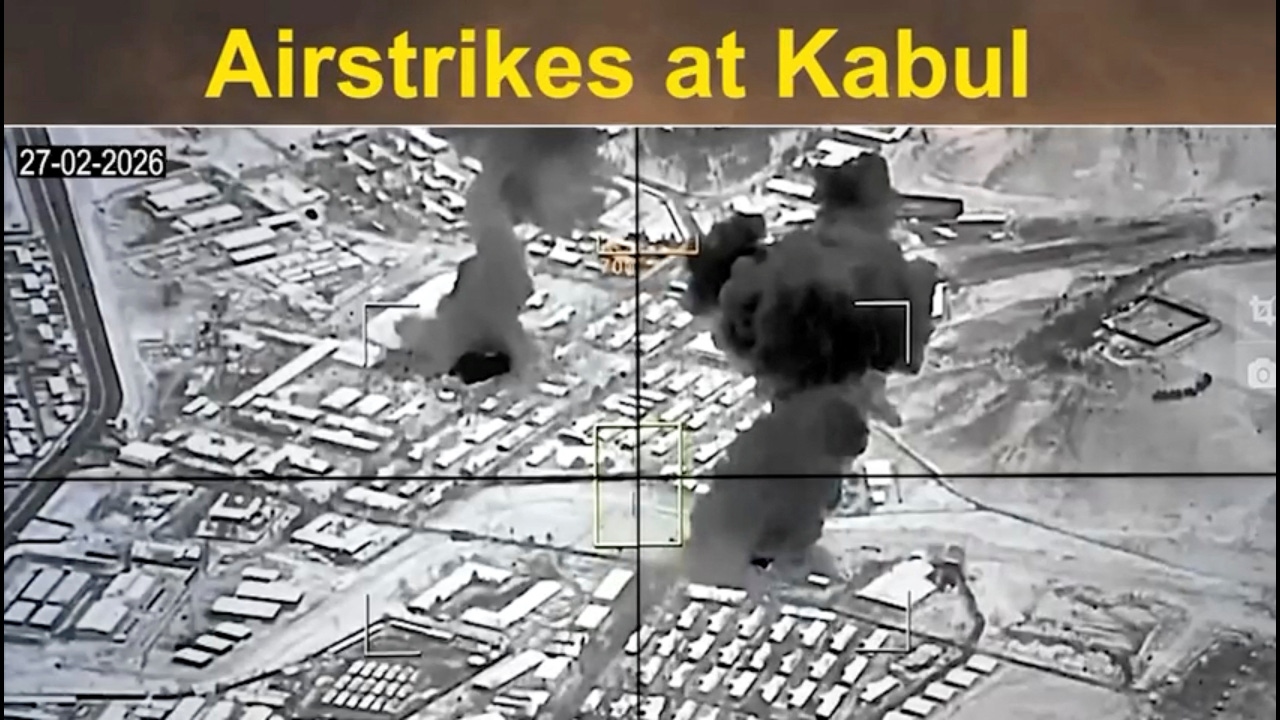
Now, bombings and military incursions mark an escalation that threatens to lead to a larger conflict. Last Friday Islamabad attacked Kabul and the Pakistani defense minister declared an “open war” with Afghanistan.
Origin of the conflict
The fundamentalists came to power in Afghanistan five years ago and Islamabad became their main international supporter, advocating recognition of the Taliban. The breakdown of that brotherhood occurs due to Kabul’s refusal to neutralize the insurgent sanctuaries that are bleeding Pakistan dry.
This demand is similar to what successive Afghan governments made to Islamabad for years with the then Taliban insurgents in Pakistani territory.
With the “open war” announced, the last security pact signed in Qatar ends and transforms the dispute on the border into a powder keg: Islamabad is a nuclear power and the Afghan Taliban have in their hands the military arsenal abandoned by the United States.
Keys to understanding the explosion
The current state of war buries the security agreement signed in Doha in October 2025. After several border clashes, both countries agreed to a ceasefire last fall with the mediation of Qatar. Kabul pledged to neutralize insurgent groups operating from its territory in exchange for Islamabad stopping its cross-border bombings.
The core of this rupture is the Tehreek-e-Taliban Pakistan (TTP), the Pakistani Taliban, a faction ideologically identical to the rulers of Kabul that has increased insurgent violence on Pakistani soil by 70% since its allies regained power in 2021.
The refusal of the Afghan Taliban to confront their Pakistani ideological brothers has pushed the military command in Islamabad to consider the avenue of dialogue exhausted, opting to launch missiles directly against supposed sanctuaries of the TTP.
How did the “open war” start?
The escalation was triggered when last week Pakistan, overwhelmed by the trickle of casualties in its own territory due to insurgent attacks and considering the demands on Kabul useless, launched a series of direct air strikes against what Islamabad intelligence identified as key TTP camps inside Afghanistan, a unilateral action that crossed the red line of Afghan sovereignty.
After the Taliban government denounced that these bombings had massacred civilians instead of insurgents, the Taliban launched an unprecedented armed response this Thursday against Pakistani military installations on the border.
The Taliban deployed elite commandos equipped with night vision goggles and heavy weapons, managing to overwhelm Islamabad’s defenses through surgical strikes that forced the current air response over Kabul.
The deportation of refugees
The tension found its social fuel when Pakistan put pressure on the precarious Afghan economy by accelerating the forced expulsion of more than a million Afghans settled there after decades of conflict – which began at the end of the 1970s with the Russian invasion of Afghanistan – a maneuver of demographic punishment that ended up causing the opposite effect by igniting a fierce nationalist fervor.
