
Relations between Spain and the United States are not going through their best moment. First it was the percentage allocated to Defense as a member of NATO and now it is the turn of the war in Iran, which has once again raised blisters in Donald Trump due to the position taken by the Government, verbalized by Pedro Sánchez who does not arouse any sympathy in the current American leader.
It all comes from the Government’s position as a result of the conflict in Iran, with its condemnation of it being an attack and an unwanted war. Subsequently, the Executive has insisted that the US will not be able to use the military bases in Spain – those located in Morón de la Frontera and Rota – for purposes other than those described in the NATO Treaty, that is, not for actions related to the war in Iran.
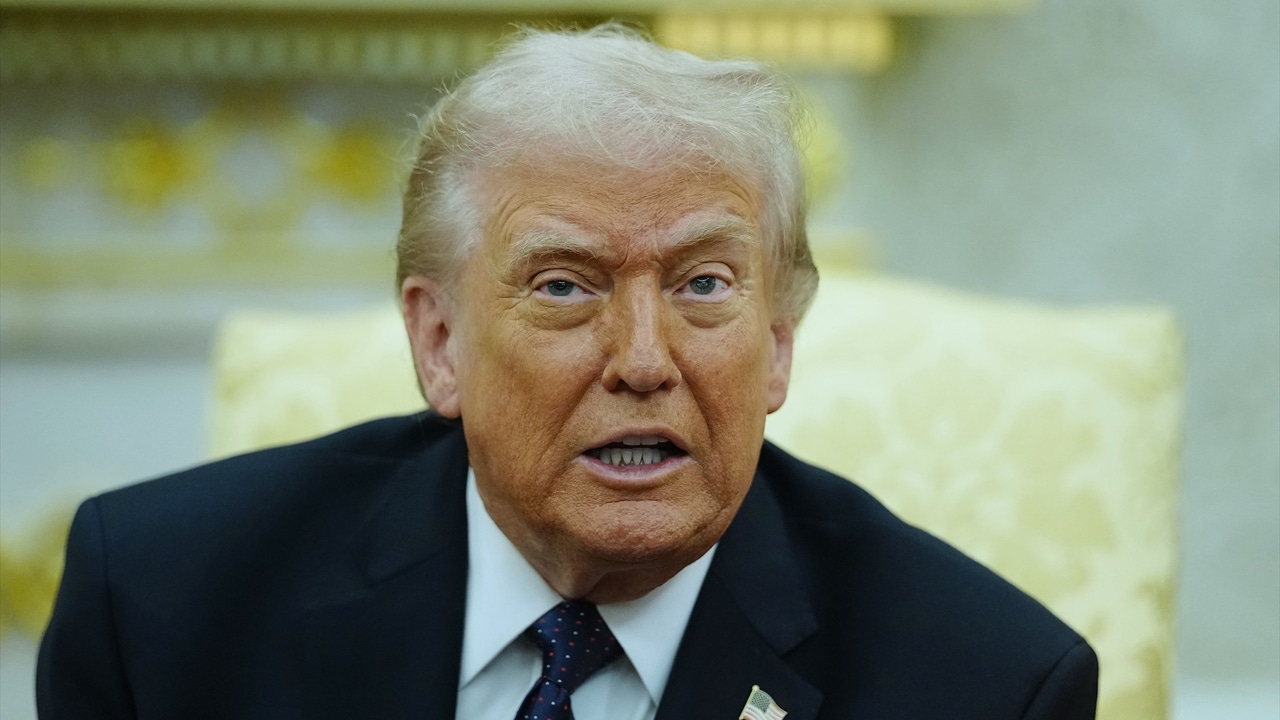
The latest words and actions from the Government of our country have made Trump talk about Spain. The US president attacked the Executive, affirmed that Spain is a “terrible” ally and even threatened to end all commercial relations by imposing an “embargo.”
What does the embargo with which Trump threatens Spain mean?
“I could stop everything related to Spain, businesses related to Spain,” Trump even said, stating that he has the “right to stop” this link: “Embargoes. I do whatever I want with them and we could do it with Spain. We are going to cut off all trade.”
But what does a trade embargo like the one Trump threatens our country mean? Until now, the North American president had used tariffs as a weapon of threat towards other countries that did not respond as desired by the Trump administration, which implied an increase in tariffs that had an impact on the exports of our products and their cost.
With the decision of the US Supreme Court to overturn the reciprocal tariffs announced by Trump, the president announced a global increase of 10% in tariffs based on another law. Now, the US president himself changes his strategy and mentions the “embargo” towards Spain.
An embargo of these characteristics is more serious than the increase in tariffs, since it implies prohibiting or restricting the exchange of goods or services with another country, that is, limiting US companies so that they cut any type of commercial link with Spain and cannot buy our products or sell their products to our country.
These are measures that are usually used as sanctions against other countries, such as the embargoes that the United States maintains with Iran, Cuba, North Korea, Syria, Russia or Venezuela, framed in the violation of human rights or the possibility of a threat to the national security of the country that imposes them.
At the moment, the US has not used this letter with any European country, so Trump’s legal protection in a situation of this magnitude before Spain would be questionable by the European Union, which has already spoken through the community spokesperson for Commerce, Olof Grill: “We trust that the US respects its trade commitments and we will ensure the full protection of the interests of the European Union.”
However, Trump asked his own Treasury Secretary, Scott Bessent, before the cameras, about the possibility of imposing an embargo on Spain, which reaffirmed the president’s “ability” to carry out this type of measures.
In his message against Spain, Trump insisted that it has absolutely nothing that the US needs: “They have great people, but they lack great leadership,” he said, at the same time that he criticized the Executive’s attitude towards the use of military bases on Spanish soil: “And now Spain has even said that we couldn’t use their bases and so on. We could use their bases if we wanted. We could just fly and use them. Nobody is going to tell us not to use them.”
Trump criticizes Spain again for its defense spending: “Terrible”
The diplomatic tensions between the US and Spain go back a long way as our country is the “only” NATO partner that has not committed to increasing its defense spending to 5% of its GDP, something that Trump criticized again. “Some of the European nations have been very helpful, and others not at all,” Trump said today, adding that “some European countries, like Spain, have been terrible.”
For his part, German Chancellor Merz, present with Trump himself, said that he is trying to “convince” the Spanish Executive to commit to greater spending on this item since in his opinion “this is part of the common security” of NATO members and “everyone must comply with those figures.”
The Government’s response: demands to comply with the law and “cease hostilities”
Sources from the Spanish Executive reacted to the Republican’s threats and stressed that if the North American administration wants to review the relationship between the United States and Spain, it must do so while respecting the autonomy of private companies, international legality and bilateral agreements between the European Union and the United States.
The Government of Pedro Sánchez also defended that Spain complies with its commitments to NATO and European defense, while the opposition charges against Sánchez’s foreign policy. The leader of the Popular Party, Alberto Núñez Feijóo, stated that Spain is “a reliable country, committed to freedom and Western values” and is “much more than its bad Government.”
In an institutional statement that took place this Wednesday, Pedro Sánchez stressed that Spain’s position is summarized in “no to war” and that they cannot support “something bad for the world simply for fear of reprisals.”
