
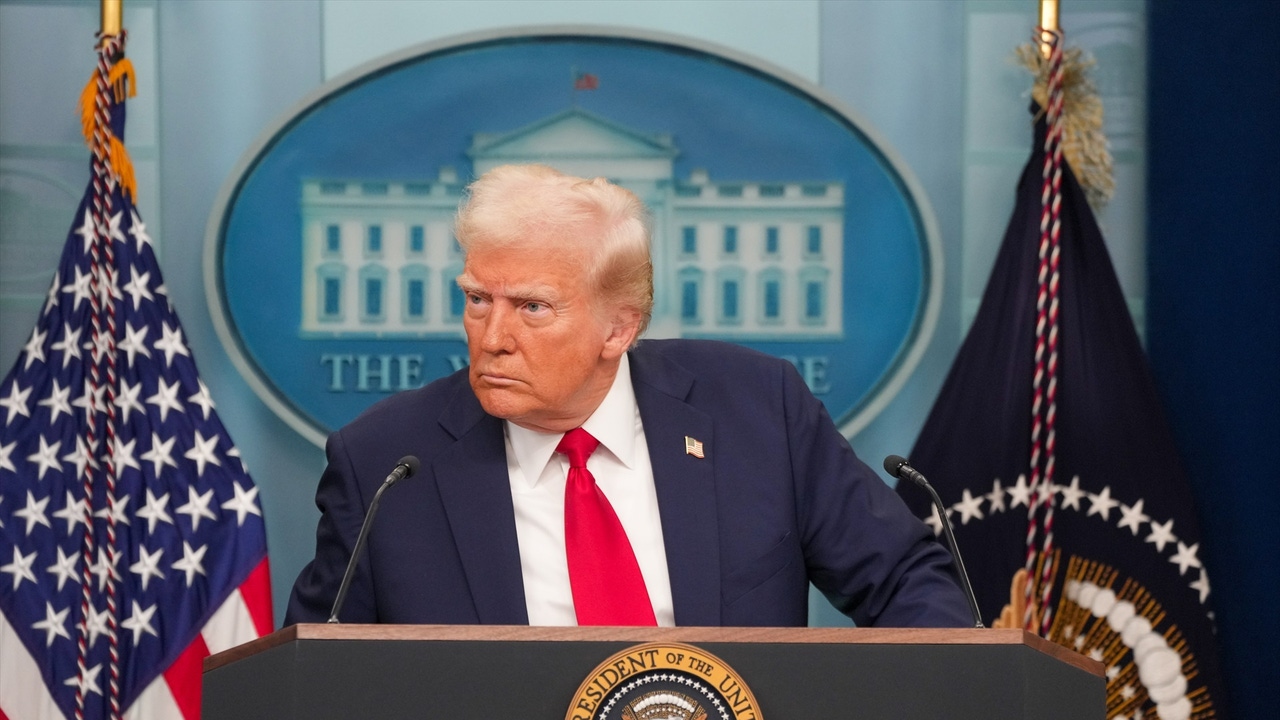
The Supreme Court has made the decision to invalidate most of the tariffs imposed by Donald Trump, considering that the North American president exceeded his limits when applying these controversial taxes to products from around the world. The Court’s ruling represents a severe setback for the current US administration, which the Supreme Court understands abused the International Emergency Economic Powers Act (IEEPA) by using it as a basis to impose its application.
Thus, the high court maintains that tariffs are a type of tax and that the Constitution reserves central decisions on taxes to Congress.
What happens with Trump’s tariffs after the Supreme Court’s decision
The ruling closes the door for the US president to use the IEEPA to impose broad and general tariffs on the grounds of a national economic emergency, restricting this instrument to traditional uses such as financial sanctions or blocking of goods. However, it does not prevent Trump from resorting to other existing legal frameworks to set taxes, such as national security provisions or retaliation measures against unfair trade practices.
Therefore, it considers that these powers should be exercised within specific limits and without using existing laws as a pretext to remake tariff policy without going through Congress.
Which tariffs are affected and which are not?
The ruling invalidates the so-called “reciprocal tariffs” and other widespread levies that Trump imposed under the IEEPA on almost all of the United States’ trading partners, with a minimum rate of 10%. Included are the Republican’s decisions to increase tariffs on Brazil and India by up to 50% in retaliation for the prosecution of his ally, former Brazilian president Jair Bolsonaro, and the purchase of Russian crude oil, respectively.
The measure also hits the 25% tariff applied to certain imports from Canada and Mexico and 10% to China, which the White House linked to the lack of efforts by those countries against trafficking in fentanyl and other drugs. However, tariffs on steel, aluminum and other levies adopted under trade and security laws other than the IEEPA will not be affected.
And the money raised? This is what the regulations say
Since April 2, 2025, President Trump’s “Liberation Day,” the US Treasury Department has raised about $240 billion in this way. According to the firm Capital Economics, if the Treasury is forced to return that money, the cost would be around $120 billion. Justice Kavanaugh, in his dissenting opinion, considered that this refund process would be “chaos.”
Lower courts had already noted that, if IEEPA-based tariffs were ultimately declared illegal, the federal government could be forced to refund the amounts collected from importers. However, it is unclear whether the Administration will establish a refund process or whether companies will be required to file a claim with the Court of International Trade.
The oil and wine sectors welcome the ruling with “hope”
The olive oil and Spanish wine sectors, the agri-food products that Spain exports the most to the United States, have welcomed the Supreme Court’s ruling with “hope.” The Spanish agri-food sector has been one of the most affected by the 15% tax that Washington has applied since last August to products from the European Union (EU).
Among Spanish exports to the United States, not only agri-food, olive oil is the most marketed product, with sales worth 1,013 million euros in 2024; while packaged wines total 400 million.
The deputy director of the Spanish Association of the Olive Oil Industry and Export Trade (Asoliva), Rafael Pico, considered that the court ruling is “very good news” that they were waiting for. “Now we are going to study the requests that importers can make for refund of tariffs, even with late payment interest as had already been announced,” Pico stated. The export sector will also analyze the “stability” of said declaration of illegality and see “if there is no maneuver to reinstate them in some other way.”
For Pico, “the disappearance of tariffs is very convenient for the consumption of olive oil in the US.” and it is “strategic” because it gives American citizens the possibility of purchasing olive oils at a lower cost without those additional tariffs.
In the case of wine, the Spanish Confederation of Wine Regulatory Councils (CECRV) has explained that the Supreme Court’s decision is a “very positive” signal to once again trust the United States to make decisions “more in line” with international rules in the commercial field. However, the Confederation has shown “a lot of caution”, since the Trump Administration itself has already taken into account the possibility of this court ruling and has planned “alternative procedures” to keep the tariffs in force.
Likewise, he hopes that the ruling will serve to “open a reflection” in the US Government on its trade policy in order to return it to the path of free trade. The sources have highlighted that “the ideal” would be for this correction of its tariff policy to be confirmed by the Administration and consolidated over time, allowing the current trade agreement with the EU to be renegotiated.
Finally, they recalled that the United States is “one of the main destinations for Spanish wines” and a market that is “very difficult” to replace.
