
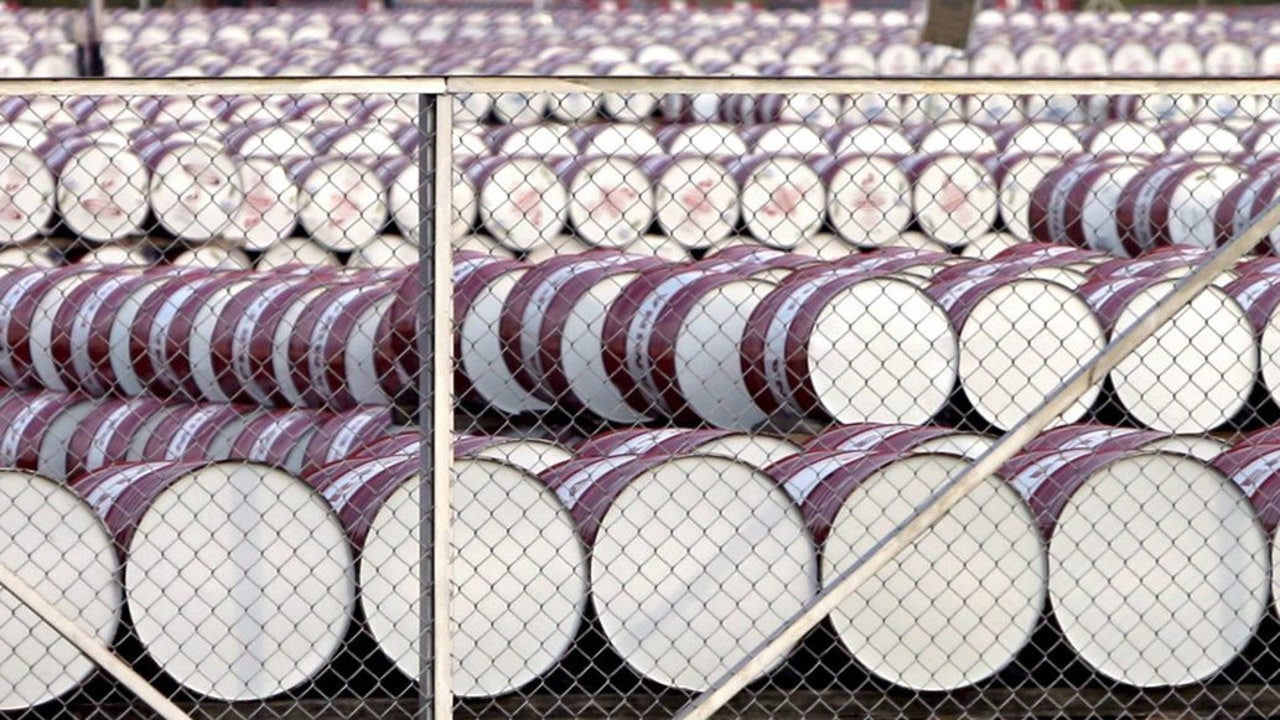
Oil prices exceeded $100 per barrel this Monday amid uncertainty over the closure of the Strait of Hormuz, through which 20% of the world’s crude oil and important items of liquefied natural gas circulate.
Due to the conflict in the Middle East, merchant traffic in the strait has been practically paralyzed, and as a result, the price of fuel has risen.
To avoid a rise in the price of oil, the energy ministers of the G7, which groups the United States, Canada, Japan, France, Italy, Germany and the United Kingdom, will meet to address the interruption of supply and discuss the possible release of oil reserves.
What are strategic reserves?
Strategic reserves (in this case oil) are large quantities of crude oil that countries store for emergencies. They serve as a kind of energy “security deposit” that is used when there are crises that can affect supply or skyrocket prices.
These oil reserves are stored by governments or companies for years in underground caverns, reservoirs or giant tanks, and are intended to be used only in exceptional situations.
One of the situations in which these reserves are contemplated is in wars or conflicts in oil areas such as in Iran or in blockades of key routes such as the Strait of Hormuz.
By removing oil from these reserves and putting it on the market, supply increases and an attempt is made to lower or stabilize the price.
The G7 debates the liberalization of reserves
Now, G7 energy ministers are to discuss the possible release of oil reserves and so far, talks between G7 members have been “positive”, adding that any coordinated action for the release of reserves would come after the energy ministers meeting.
In this sense, one of the sources indicated that the United States considers appropriate the joint release of between 300 and 400 million barrels, which represents between 25% and 30% of the 1,200 million barrels of the reserve.
Although oil prices exceeded $100 per barrel this Monday due to uncertainty over the closure of the Strait of Hormuz, the expectation of a release of oil reserves substantially relieved pressure and returned the costs of a barrel of crude oil to below $100.
Iran warns that the barrel could rise to 200 dollars
Although prices have dropped below $100, a spokesman for the Iranian Army has issued a warning to the United States and Israel. He assures that the price of oil could skyrocket to $200 per barrel if the military escalation continues.
“If they can afford the price of oil at $200 per barrel, let them continue playing this game,” the spokesman said in statements reported on Iranian state television.
Donald Trump has threatened to “take control” of the Strait of Hormuz
For his part, the president of the United States has assured that he is “thinking about taking control” of the Strait of Hormuz and threatened Tehran if it interferes in this navigable waterway.
“They have shot everything they had to shoot, and they better not try anything clever or it will be the end of that country. If they do something bad, it would be the end of Iran and its name would never be heard again,” he concluded.
