
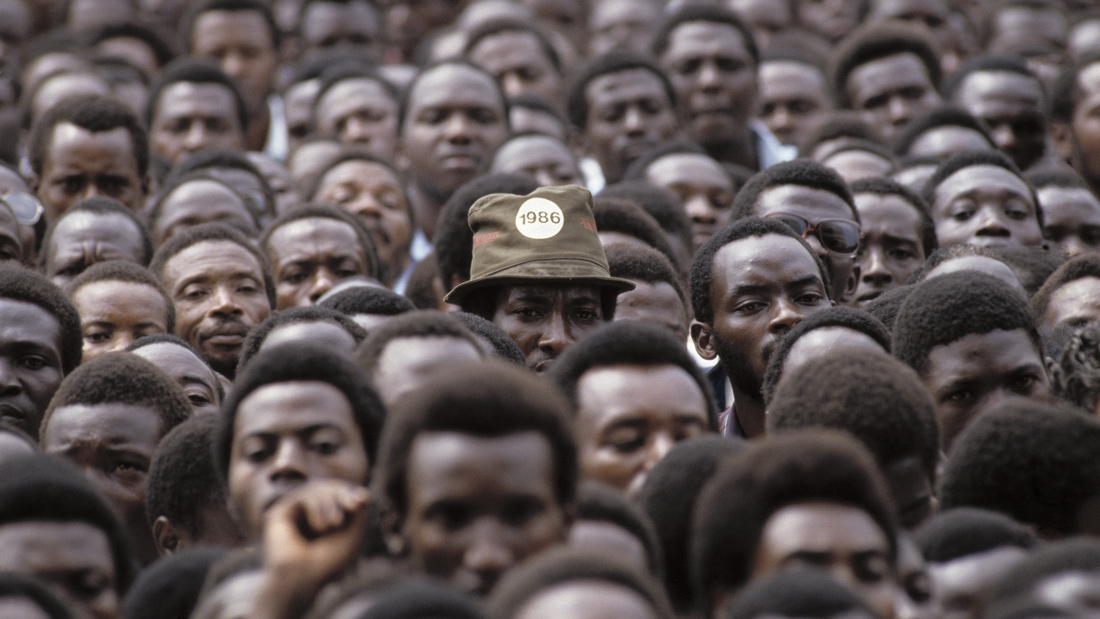
With 72% of the votes, the octogenarian president of Uganda achieved a seventh term in office last January.
In 1986, the National Resistance Movement entered Kampala and inaugurated a new stage in the country. At the helm was a young Yoweri Museveni who, 40 years later, still holds the presidency of the country. The article delves into the changes experienced in the nation throughout these decades.
Forty years are very long. Since 1986, Real Madrid has won nine European Cups and Museveni has won seven elections, even though between 1986 and 1996 no elections were held in Uganda under his mandate. In the last ones, held in January, the 82-year-old president won with 72% of the votes, although with a participation of close to 50% of the electorate. With this victory he guarantees five more years at the head of the country. If his health allows, he will reach 87 at the end of his seventh term.
His career at the head of the country in these four decades is marked, on the one hand, by unquestionable economic growth and, on the other, by a promise of democratization of the country that has never been carried out. In fact, the trend that at the beginning of the century indicated that the country could move towards greater democratization of political and social life has been considerably reversed.
a little history
In 1986, Museveni entered Kampala at the head of the National Resistance Movement (NRM) and ended a series of dictatorial governments led by Idi Amin, Milton Obote and Okello – the latter having overthrown Obote a year earlier. In the mid-1980s, the country was in a very worrying state. Yoweri Museveni was installed in power and during the first decade he began to implement a series of policies aimed at socially stabilizing the country and activating the economy. It was not until 1996 when the first elections were called, under the model of a democracy without parties. In 2005, due to international pressure, multipartyism was approved. This opening was preceded by a constitutional change that eliminated the two-term presidential limit, allowing Museveni to run in 2006 for the third time. This change to the Magna Carta was not enough and in 2017 he was forced to approve an amendment – 74% of Ugandans were against it – to repeal the rule that established 75 years as the maximum age to run for president. Museveni was getting older. Despite the popular opposition reflected in the polls, the change was approved and, since then, he has won twice more at the polls: in 2021 and 2026.
economic growth
Since 1986, the Ugandan population has gone from 15.4 to more than 50 million and is expected to exceed 57 by 2030. This population growth means that the average age barely reaches 17 years, which means that the country’s economy will have to absorb a large number of young workers in the coming years. The economy has grown at constant rates since Museveni came to power, who did not hesitate to accept the measures of the International Monetary Fund and the World Bank. In his autobiography, Sowing the mustard seed, from 1996, the Ugandan president states that he managed to “demonstrate to the radical wing that, in reality, it was more patriotic to privatize the economy than to leave a large part of it in the hands of the public sector”, since “it is a method that harnesses people’s energy to boost economic growth, while keeping the economy in public hands causes its decline.” As he explained in this text, the market economy was not adopted “as a result of pressure, but because we were convinced that it was the right thing for our country.”
GDP growth has gone from 0.4% in 1986 to 6.1% in 2024, although reaching peaks of 11.5% (1995) and 10.8% (2006). This has allowed Uganda’s GDP to rise from $3.37 billion 40 years ago to over $46.36 billion today. However, as this evolution has been accompanied by high population growth, GDP per capita has not reflected this increase. Currently, this figure is growing at a much lower rate than the country’s economy. Eight years ago, José Carlos Rodríguez Soto wrote in MUNDO NEGRO that “the wealth that is created is insufficient and services do not increase at the same rate as the inhabitants.” To all this we must add that the Ugandan economy has not experienced structural changes, since it has gone from depending on coffee to gold.
Although inequalities remain deeply rooted in the Ugandan economy – the Gini index, which measures inequality, has remained stable over the last two decades – the data show that the life expectancy of the population has increased by more than 20 years – it currently stands at 68 –, access to electricity reaches 51% of the population – in 1994, it barely reached 0.5% – and there has been a significant reduction in extreme poverty. which, however, still remains high.
The formula of water
Yoweri Museveni explains in his autobiography that democracy is like water: “The formula remains the same, whether liquid, solid or gaseous. You must choose the form of water that suits or serves your purpose. An ice cube will be useful for quenching your thirst, but not for taking a bath! Likewise, the form of democracy must be in line with local circumstances. The Ugandan statesman’s first commitment was for a model of a Parliament without parties, in which its members voted as individuals. This system prevailed until the transition to multipartyism. Although at the beginning of the 21st century there was a certain optimism that, hand in hand with economic growth, the system and institutions would be democratized, the truth is that there were already signs that the path was different. Lawyer and activist Anne Mugisha, writing in 2004 for the Journal of Democracy, believed there were strong reasons to doubt that Uganda was moving towards democracy: “The real transition taking place there is from a relatively enlightened and benevolent authoritarian regime – a country that former US Secretary of State Madeleine Albright once called “a beacon of hope” – to a paradigmatic case of entrenched one-man rule.”
Aili Mari Tripp, a political scientist specializing in African studies at the University of Wisconsin-Madison, published the book Museveni’s Uganda: Paradoxes of power in a hybrid regime in 2010, in which she analyzed the Ugandan system as a hybrid regime, one in which “rights and freedoms are limited so frequently that they cannot be considered democratic, but they are not done so systematically enough to be considered totally authoritarian. For the Finnish-American academic, the economic successes of the African country served to legitimize Museveni in power and helped him gain political support for certain undemocratic policies. The author argued that while Uganda has experienced a gradual improvement in political freedoms and rights since 1986, these changes are precarious in semi-authoritarian regimes because “they can be easily reversed and manipulated.” In conversation with MUNDO NEGRO via WhatsApp, Tripp considers that the country is no longer a hybrid system, but rather “it is a full-fledged authoritarian regime.” In this sense, Uganda’s fall in the Press Freedom Index prepared by Reporters Without Borders is illustrative, where it already occupies 143rd place out of 181 globally. Added to this is that, according to Transparency International, Uganda is one of the most corrupt countries in the world. In this classification it is in position 148 out of a total of 182 countries.
From seed to plant
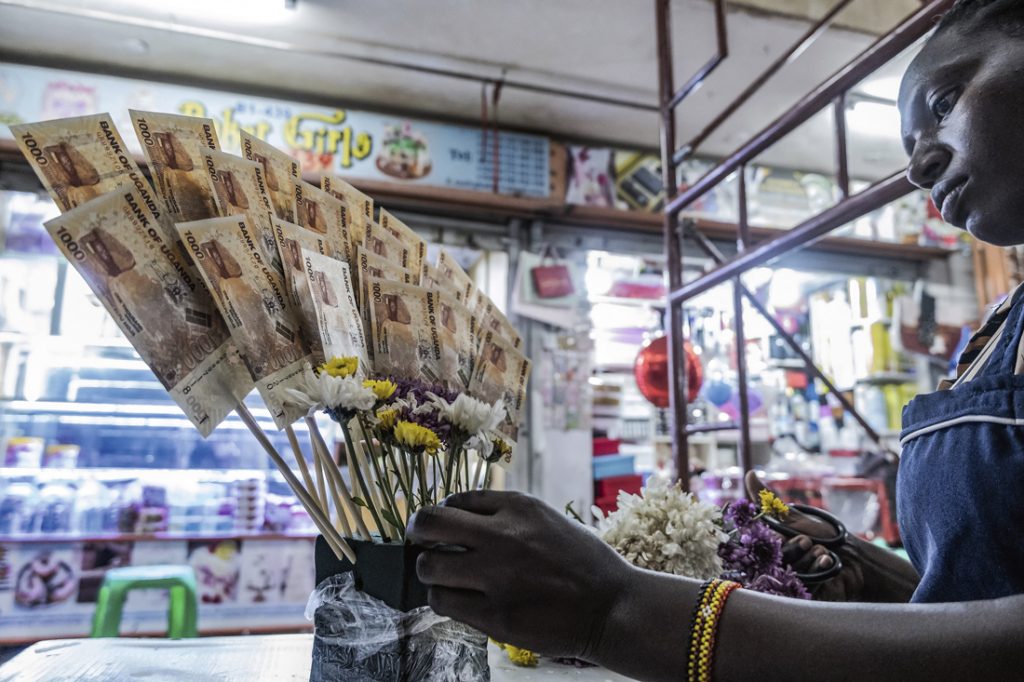
Mustard is a plant that develops very quickly. Some varieties, like the one that grows in Palestine, can reach three meters in height, although it is still herbaceous. Certain species reproduce very quickly, becoming a problem for other plant varieties. Museveni, as Pablo Moraga pointed out in the monograph on Uganda that this magazine prepared (see MN 638, pp. 10-15), “has built a network of partners, both internal and external, to remain in power” and has not allowed any political alternative to grow around him. Neither Kizza Besigye first nor Robert Kyagulanyi later have managed to prevail over Museveni, who has absolute control of the Army. According to Tripp, the paradox that Museveni symbolizes is that he remains “in power because the personal cost of leaving office is too high.” Moraga pointed out that the president “does not want to continue in power to enrich himself, but because he has a project for his people and thinks he is the only one who can lead it.”
The big question is what will happen in the future. Victor Ochen, 2016 Black World Brotherhood Award, stated in these pages (see MN 638, pp. 52-55) that “Uganda has been with a specific type of leadership for too long and to be inclusive a transition in mentality is needed.” The truth is that an increasingly older leader governs an increasingly younger country and the prospects are not at all promising, since his son, General Muhoozi Kainerugaba, emerges as the most likely successor.
