
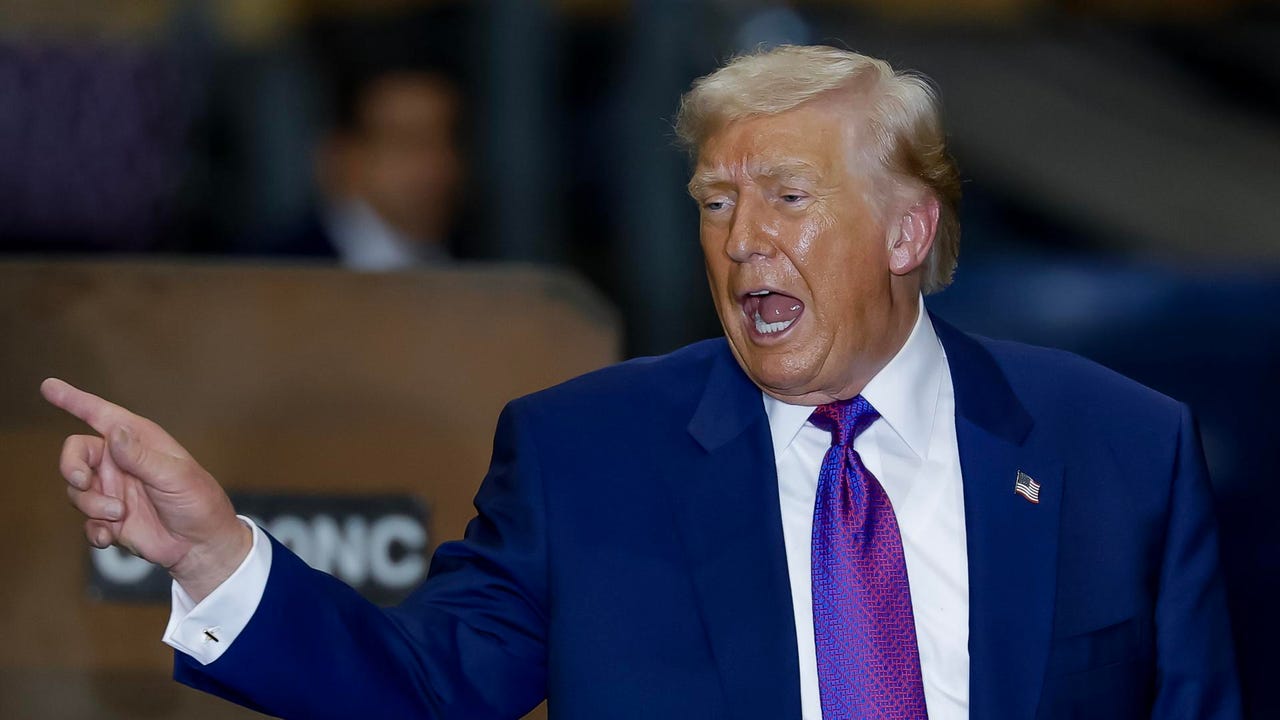
The Supreme Court of the United States ruled this Friday against the International Emergency Economic Powers Act (IEEPA) granting the president of the country the ability to impose so-called reciprocal tariffs, in what represents Donald Trump’s biggest defeat to date since his return to the White House.
“The IEEPA does not authorize the president to impose tariffs,” concludes the High Court, with a conservative majority, which by a majority of 6 to 3 has upheld the ruling of a lower court that had already ruled that the president’s recourse to this 1977 law exceeded his authority. Supreme Court Justices Clarence Thomas, Samuel Alito and Brett Kavanaugh have expressed a contrary opinion.
In this way, the Supreme Court rejects the Government’s interpretation that the IEEPA granted the president the power to unilaterally impose unlimited tariffs and that it is not subject to the significant procedural limitations of other tariff laws and emphasizes that the White House must “add clear authorization from Congress” to justify its extraordinary attribution of the power to impose tariffs.
In this sense, he considers that the IEEPA’s grant of the power to “regulate imports” is insufficient and recalls that this emergency legislation does not contain any reference to tariffs or duties, adding that “so far no president has read the IEEPA to confer such power.”
“We do not claim any special competence in economic matters or foreign relations. We claim only, as appropriate, the limited role assigned to us by Article III of the Constitution. In compliance with this role, we maintain that the IEEPA does not authorize the president to impose tariffs,” he concludes.
A “complete disaster” that forces the US to reimburse billions of dollars
The US president warned in mid-January that if the Court ruled against the tariffs, it would be “a complete disaster” that would force the country to reimburse “trillions” of dollars.
The global tariffs announced by Trump in April 2025 were challenged by a dozen US states and American companies that believe the president overstepped his bounds by imposing the levies through executive orders citing the IEEPA, legislation that, in certain circumstances, gives the president the authority to regulate or prohibit international transactions during a national emergency.
The US Supreme Court, with a conservative majority of 6 to 3, heard in early November 2025 the arguments of the Trump Administration regarding the case, as well as those of a federal court that considered that the president had improperly invoked an emergency law to impose taxes on dozens of business partners last April.
At the end of last May, the International Trade Court had ruled that the president had exceeded his authority by invoking the International Emergency Economic Powers Act for his announced tariff policy.
The resolution of the US Supreme Court now opens the door to a complex legal battle in which thousands of companies affected by the rise in import prices could claim refunds.
