
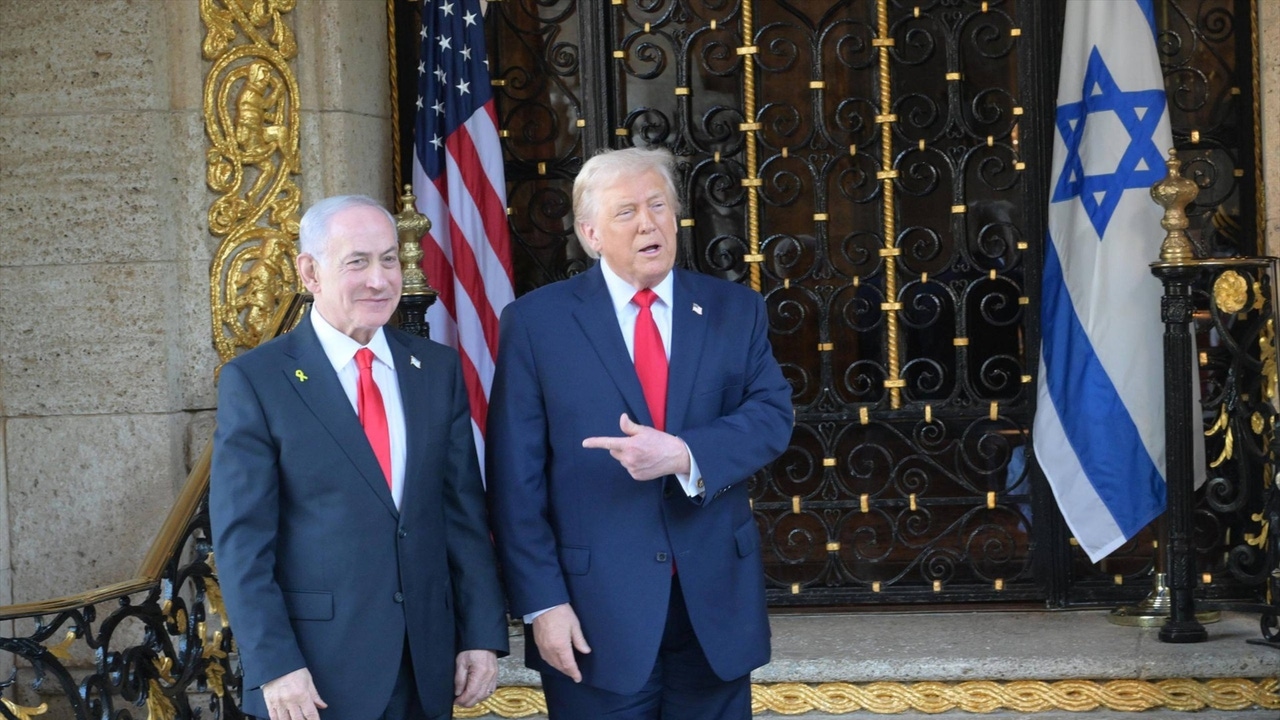
Israel’s attack on the South Pars gas field, the largest in Iran and shared with Qatar, has generated the first fissures between Donald Trump and Benjamin Netanyahu since the conflict began and with a direct impact on the energy markets.
The president of the United States has disassociated himself from the offensive. Trump assured on his social network that Washington had not been informed of the attack. However, this version has been questioned by both US media and official Israeli sources, who maintain that the United States did know about and approved the operation, although it did not participate directly.
The contradiction has revealed a lack of coordination between the White House and the Israeli Government. In fact, Trump himself has implicitly recognized the differences by stating that both countries “act independently”, although they maintain a close relationship.
“Israel will not attack again”
After the bombing, Trump has tried to contain the escalation and has personally asked Netanyahu not to attack Iranian energy infrastructure again. “I told him: don’t do that, and he won’t do it,” Trump said, knowing that part of the world’s energy supply is at stake.
Trump adds that “Israel will no longer attack” the South Pars field unless Iran responds by attacking energy infrastructure in Qatar. In that case, he warns that there will be a massive response from the United States.
Netanyahu, for his part, has denied having pressured Trump to act against Iran and has defended the decision-making autonomy of the American president: “Does anyone really believe that President Trump can be told what to do?”
Different objectives and increasing tension
While the United States focuses its strategy on weakening Iranian military capabilities, Israel has expanded its attacks on energy infrastructure.
United States allies in the region consider that the Trump administration has been dragged by Netanyahu’s strategy.
Furthermore, the attack has opened the door to chain retaliation against energy infrastructure in the Gulf, including facilities in Qatar and Saudi Arabia, increasing the risk of a global energy crisis.
Immediate impact on oil and markets
The consequences have not been long in coming in the markets. The price of a barrel of Brent has skyrocketed to $118, levels not seen since the start of the war in Ukraine, while gas has risen 21%.
Stock markets have reacted with widespread falls, including the Ibex 35, in a context of growing uncertainty. Given this scenario, the International Energy Agency has announced the release of 426 million barrels of strategic reserves to contain the impact.
Trump has assured that he will do “whatever is necessary” to stop the increase in the price of oil, and his Administration is even considering lifting sanctions on Iranian crude oil to facilitate its entry into the market.
Doubts in Washington
The controversy over prior knowledge of the attack has also raised questions within the US Government itself. If, as various reports indicate, the Administration was aware of the operation, the question arises as to whether the president was informed or whether he has chosen to distance himself after the fact.
In parallel, the Pentagon has already requested an additional $200 billion to meet the costs of the campaign, in a conflict that is expanding both militarily and economically.
