
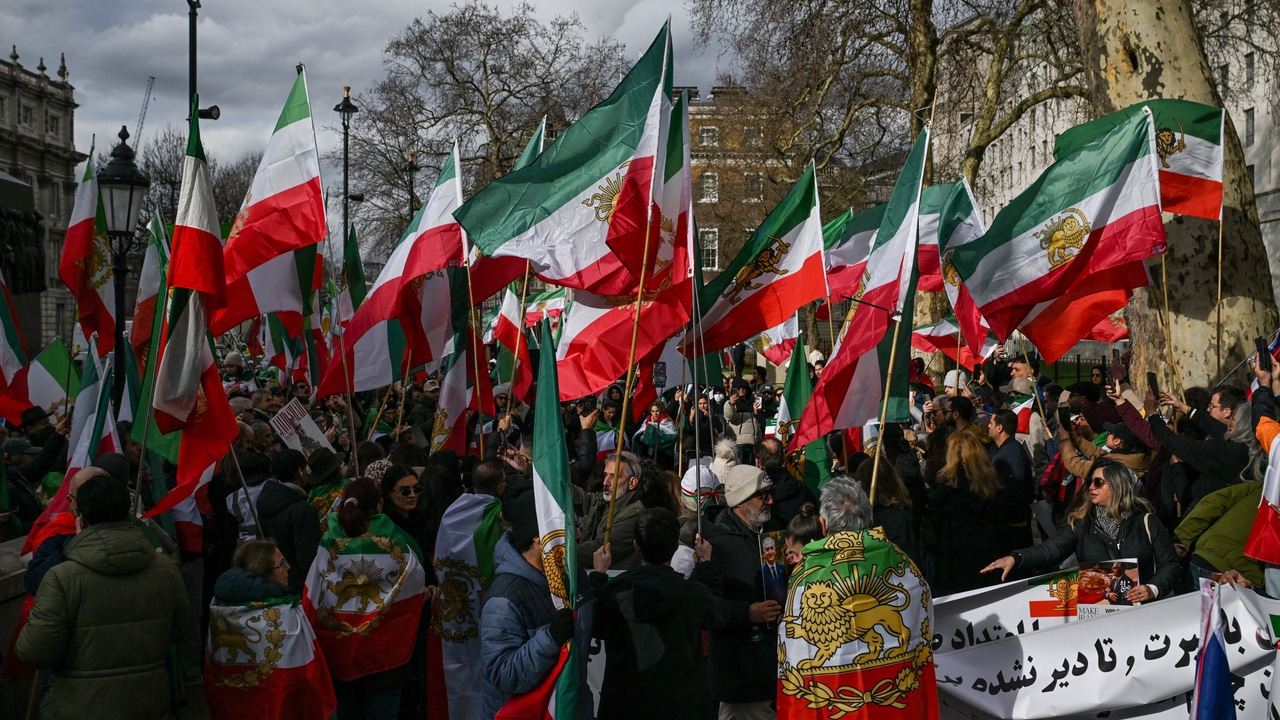
Iran has announced the death of Ayatollah Khamenei after attacks by the United States and Israel. A news that has been interpreted in two opposite ways in the population: celebrations by those opposed to the regime and protests by those who support it. It should be remembered that Khamenei had been in power for 40 years; The youngest people do not know the country without him at the helm.
After the announcement of his death, the population opposed to the ayatollah regime took to the streets to celebrate. As can be seen in videos broadcast by Reuters, euphoria and shouts of celebration took over the people after hearing the news at night. The streets collapsed, because many went out by car to whistle and tour the city. In fact, in one of the streets of Karaj, the Iranian population gathered to dance.
At another point in the city they set off fireworks and a man even climbed on top of a monument, on which he placed the pre-revolutionary flag.
Protests, sadness and lamentations
However, in other parts of the city, reactions have been very contrary. Early in the morning, supporters of the regime took to the streets to protest and mourn the death of Ayatollah Khamenei, “in a state of shock” and “impacted.” “We have lost our most beloved person, our leader, our teacher,” an emotional Iranian man lamented to Reuters.
Others have appealed for “revenge” that they hope will be “forceful”, specifically against Israel. “As the leader himself said: ‘Israel must be eliminated from the face of the earth,'” another recalled. A sentiment shared by another citizen: “Maybe if all of Israel was wiped out, maybe Netanyahu should be killed without a doubt, maybe that would calm our hearts a little.”
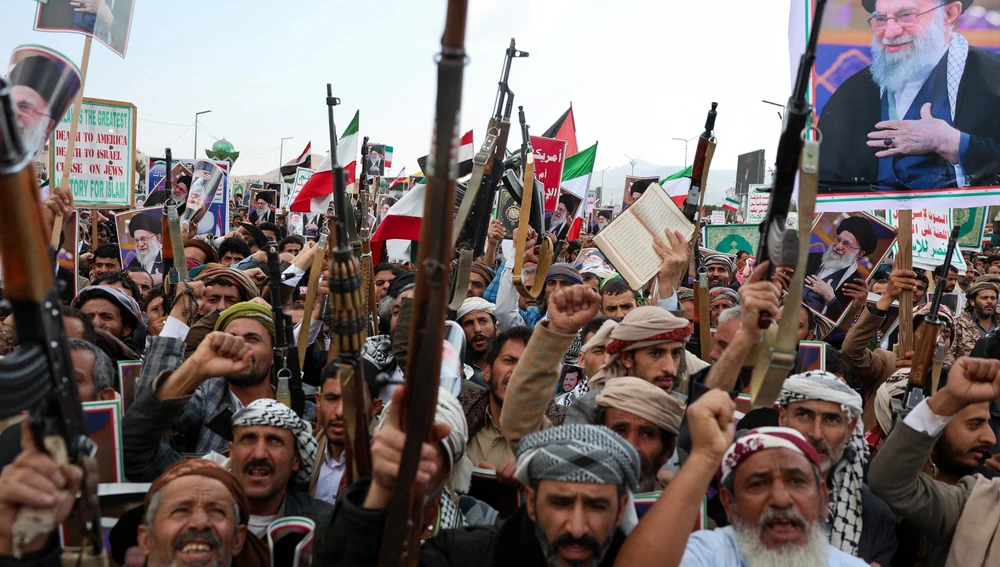
With Iranian flags and photographs of the supreme leader, Saina and Reza, residents of Tehran, have assured Reuters that they are “stronger than ever” and that they are “not” afraid. Amir Ali, another Iranian citizen, has highlighted his “firm support” for the government and that he is “ready to defend the homeland.” Leila has gone further, stating that she will “sacrifice” her life “if necessary.”
Reactions in other countries
In other countries the reactions have not been long in coming either. For example, in Pakistan, at least 10 people have died in the city of Karachi, after clashes broke out between the police and Protestants aligned with the Ayatollah’s regime. According to the spokesperson of the Edhi Foundation ambulance and rescue service, Azeem Khan, “the bodies have already been shifted to the civil hospital in Karachi.”
In Iraq, its citizens have also taken to the streets to protest the death of the Ayatollah, which they have described as a “great catastrophe” in statements to local media. “We have lived one of the hardest days of our lives,” they added. “Today we are all orphans,” they lamented.
For its part, in Srinagar, a city administered by Kashmir, in India, the streets have also filled the streets in protest. “Everything we had is gone” or “Our leader, Ayatollah Ali Khamenei, has been mercilessly martyred” are some of the testimonies of citizens.
