New attacks on ships in the Persian Gulf and the Strait of Hormuz, including two oil tankers in Iraqi territorial waters, have caused a new rise in the price of Brent above $100 per barrel. The conflict initiated by the US and Israel continues to wreak havoc and threatens to generate an energy crisis despite the emergency measures adopted by the International Energy Agency.
$100 a barrel of Brent
This Wednesday, the IEA announced the largest release of reserves in its history, 400 million barrels of crude oil, which would last approximately 20 days, according to the words of the President of France, Emmanuel Macron. Despite this, the price of Brent oil – a reference in Europe – once again exceeded $100 per barrel this Thursday during trading hours in Asia, whose markets remain in the red.
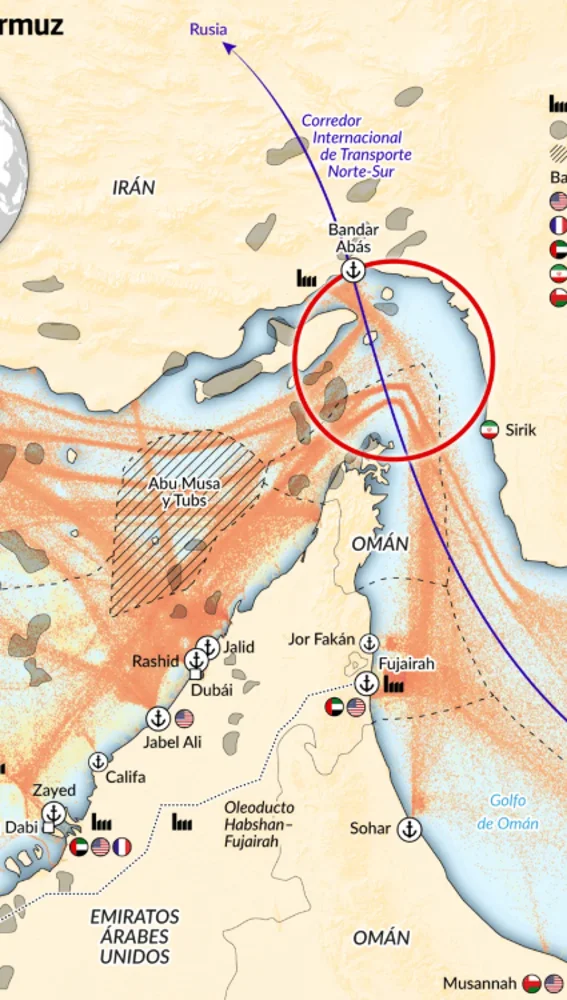
Since its beginning on February 28, the war in the Persian Gulf has generated strong tension on global oil and gas supplies, mainly due to the almost total blockage of maritime traffic in the Strait of Hormuz, controlled by Iran and through which around 20% of the crude oil and liquefied natural gas consumed in the world transits.
Keep sea routes out of conflict
Several shipping companies have interrupted or reorganized transit through Hormuz and some insurers have restricted coverage, which has increased transportation costs and generated logistical disruptions. Meanwhile, countries like Iraq have expressed their “deep concern” about the escalation of the war and have asked the parties that sea routes and energy infrastructure “stay out” of the conflict given the “direct impact” that this has not only on the countries of the region, but on the stability of the world economy and energy markets.
The UN Security Council has also condemned any action or threat by Tehran that aims to “close, impede or otherwise hinder international navigation through the Strait of Hormuz, or that endangers maritime security in Bab el-Mandeb”: “Any attempt to prevent legitimate transit passage or freedom of navigation in these international waterways constitutes a serious threat to international peace and security,” it noted.
The importance of Iran in the oil industry
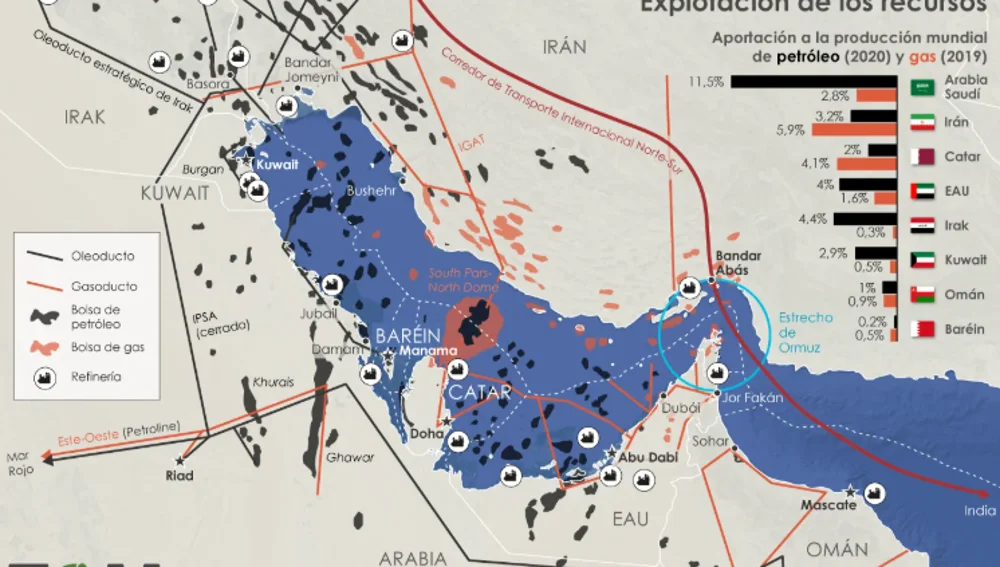
As explainedThe World Orderto understand the importance of the energy crisis derived from the war in Iran and the blockade of the Strait of Hormuz, we must understand the importance of the country in the global oil industry and the strategic nature of the enclave. The Persian Gulf has two-thirds of the world’s oil reserves and one-third of the world’s gas reserves.
The Iranian Revolution of 1979 not only marked the beginning of problems between Iran and the US and Israel, but it was also the beginning of the rivalry between Iran and Saudi Arabia for control of the energy markets, since the Saudis are the third largest oil producers in the world.
Iran is a country very rich in energy resources: it is the third largest producer of natural gas, behind the United States and Russia; and the seventh largest oil producer. If we talk about reserves, it rises positions: it is the second country with the largest natural gas reserves and the fourth with the largest oil reserves.
Hormuz and Bab el Mandeb
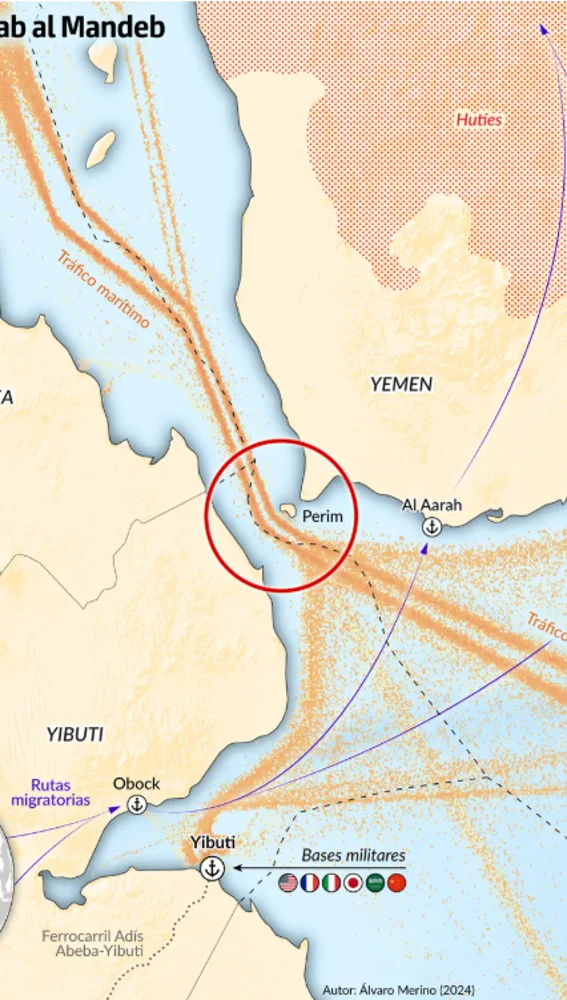
Its fundamental role is not only based on the energy resources it has, but also on its control of two of the main enclaves: the Strait of Hormuz and the Strait of Bab el Mandeb. Iran has a large network of gas and oil pipelines through which much of its energy production travels, but the majority does so through these maritime passages.
Many of the hydrocarbons produced in the Persian Gulf exit through the Strait of Hormuz and its blockage would have very negative consequences: on the one hand, it would affect the distribution of six of the largest oil producers and four of the gas producers.
Trade routes to Europe, North America and Israel travel through the Bab el Mandeb Strait and, although it is further away from Iran geographically, the country has many alliances with the Houthi rebels who are at war with the Government of Yemen and who have attacked numerous merchant ships in the area.