
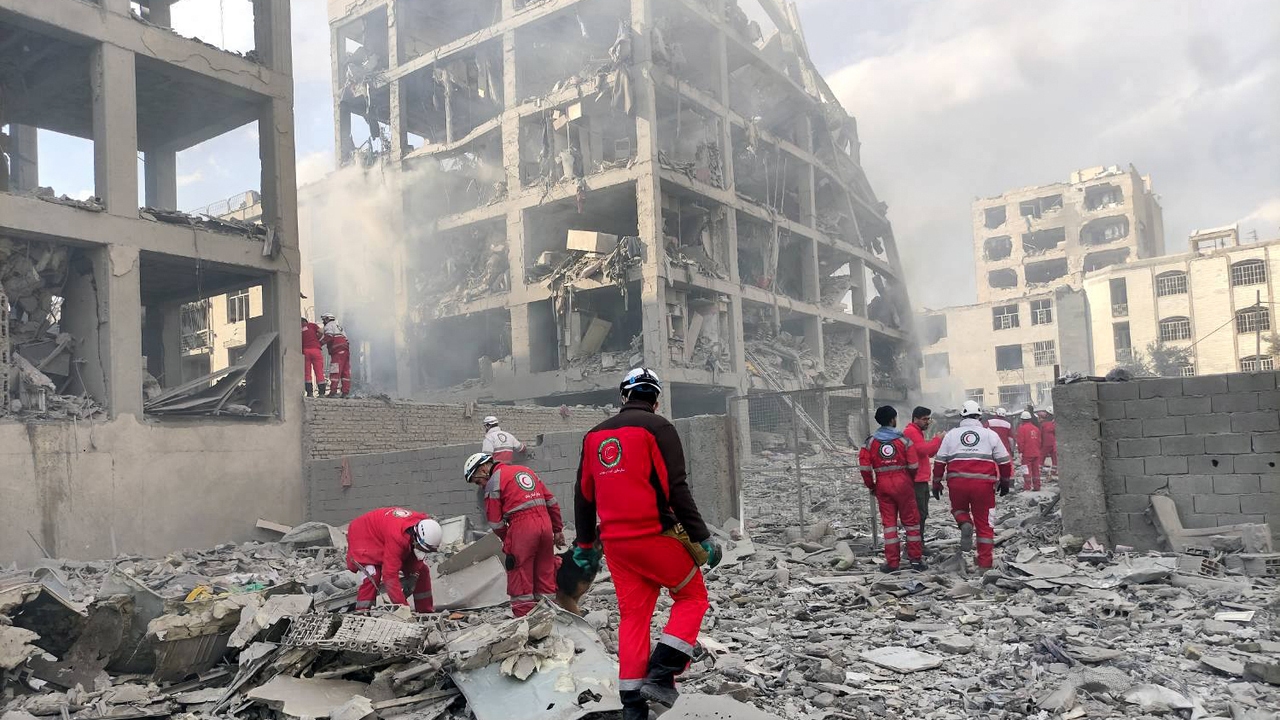
Donald Trump has assured that the war against Iran is over. However, their changing discourses contrast with the vision of international experts.
More than two weeks after the start of the US and Israeli military operation against Iran, international concern is growing about the duration and consequences of the conflict, especially with the oil blockade in the Strait of Hormuz. Far from Trump’s claims, there are analysts who assure that the conflict could last for months and even more than a year.
This is the opinion of Jesús Gil, general secretary of the Spanish Association of Orientalists and professor of the master’s degree in International Security at the International University of La Rioja (UNIR). In statements to EFE, he maintains that what has happened since March 8, when the attacks against Iran began, “is only the beginning of a big and bloody war.”
Iran’s interest in prolonging the conflict
In his opinion, it was never realistic to think of a quick conflict as the US administration has sold. Remember that other wars in the region, such as Iraq, dragged on for years. In addition, there is another circumstance that invites us to think about an extension. Tehran may be interested in prolonging the confrontation and involving more international actors.
According to him, Iran has already launched attacks against military bases of European countries such as the United Kingdom, Italy or France with a presence in the area, in an attempt to expand the scenario of the conflict.
Among the possible scenarios, Gil even mentions the possibility of a civil war within Iran, either due to clashes between different internal currents or due to an eventual rebellion by the Kurdish minority against the ayatollah regime.
The expert also proposes a scenario of war of attrition that could last one or two years, with very serious global economic consequences and with countries entering the dynamics of a war economy.
A possible “drastic solution”
He warns of the risk that, if the conflict continues and becomes very unpopular, a “drastic solution” will be sought, in parallel with the end of the Second World War and the use of atomic bombs in Hiroshima and Nagasaki, which he describes as a “crime against humanity.”
According to Gil, history shows that, when wars drag on and generate great attrition, the powers involved tend to seek forceful decisions to force their end.
Meanwhile, he warns that Iran maintains the capacity to further tense the situation, both by blocking oil trade in the Strait of Hormuz and by promoting attacks in the United States or Western countries. Scenarios that, if they occur, could further aggravate the conflict.
