
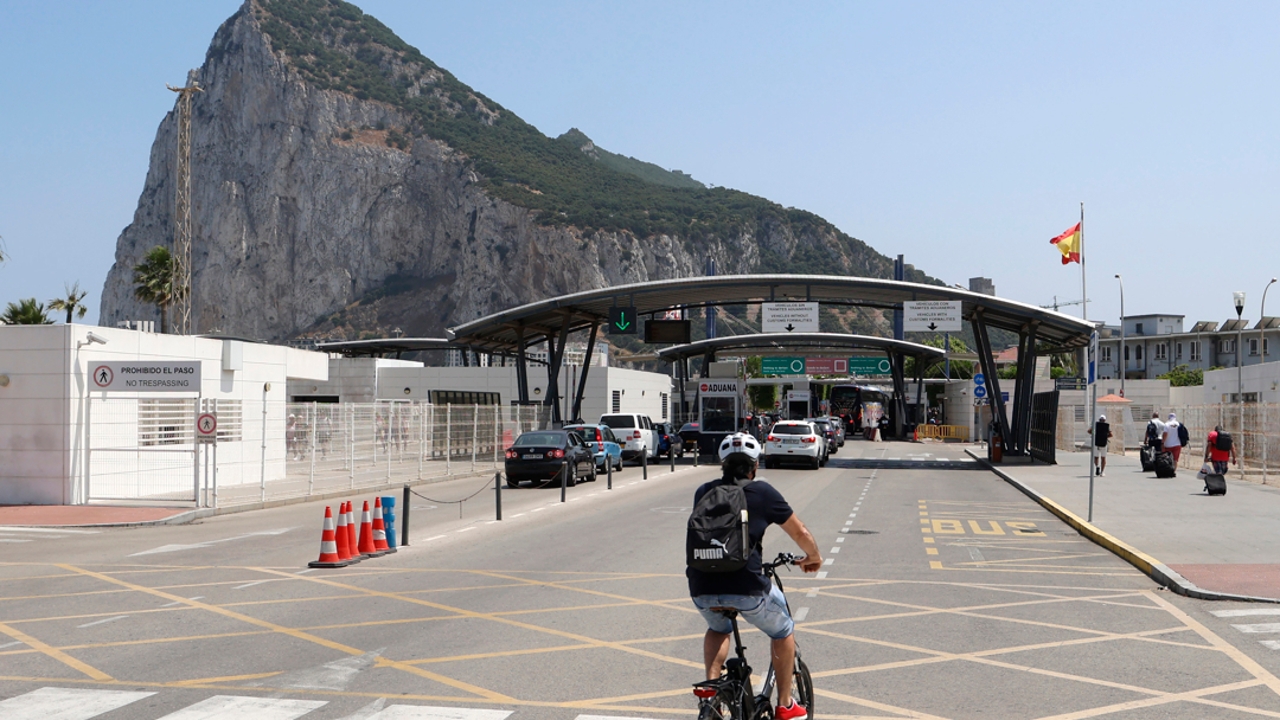
The worst thing that could happen to Gibraltarians is Brexit, and that is why 95.91% of Gibraltarians voted no. With this agreement, however, they eliminate most of the inconveniences that their metropolis had caused them by leaving the EU, so that, if any Gibraltarian thought that belonging to the United Kingdom had stopped being practical, now it will still seem great to be subjects of Her British Majesty because they belong to the Customs Union, which is like being part of the Single Market… they are de facto integrated into the Schengen area… and physical barriers generally disappear. legal provisions for goods and people to leave and enter the Rock. Let’s go in parts.
Port and airport
For Spain it is a success that Spanish police officers can carry out controls at the port and airport. But they won’t be the only ones. There will be a double Gibraltarian control. Of course, Spain has the possibility of preventing the entry of citizens from third countries, including the British. This may be seen by critics in London as a surrender of sovereignty (although the military is excluded).
Citizens entering through the port will have to go to the airport to follow the same controls. What applies is the Schengen Borders Code, so, although Gibraltar does not formally enter that free movement area, the result is practically as if it did. In fact, between Spain and the British colony, border controls and physical barriers such as the fence, the most symbolic part of this agreement, disappear.
By the way, another supposed “cession of sovereignty” for the supposed English critics: there will be joint use of the airport through a joint venture constituted by the United Kingdom and Spain.
Judicial and police cooperation
Here the tensions have been many and diverse in the past and Spain has wanted to take advantage of it to have more hand. For example, in hot pursuits. The Spanish police may pursue an individual who wants to escape through the streets of the Rock if he or she has allegedly committed one of the crimes mentioned in a predetermined list. There will be joint patrols and operations and Madrid will have the right to veto residence permits in Gibraltar, claiming that they pose a risk.
In return, Gibraltar obtains data from Europol and Eurojust, but without direct access. You have to ask for them. Protocols are also established to exchange criminal records and hand over wanted persons.
Economy
Gibraltar enters the Customs Union with the EU by eliminating physical barriers to the movement of goods and applying European standards on customs, indirect tax and state aid matters. This allows Gibraltarians to access the Single Market, which means that they are no longer an island on the European continent due to Brexit… and Europeans think that this way they protect the integrity of the Single Market and avoid possibilities of fraud.
But, above all, Spain thinks that it helps the Spaniards who live just opposite, in the Campo de Gibraltar, creating what they call a “zone of shared prosperity” that forces the colony to homogenize its rates with the Spanish ones. But they have to progressively apply a Gibraltarian VAT and raise their taxes on tobacco, which would theoretically put an end to one of the most classic smuggling.
The 10,000 Spaniards who cross every day to Gibraltar will have the same rights as the Gibraltarians themselves (social benefits, salaries, working conditions…) except for one thing: housing. Because, if not, there would end up being more Spaniards than Gibraltarians and one day in a referendum there could be “Spanish Gibraltar”.
By the way, it is a bit diffuse, but the parties say that they want to create a kind of cohesion fund for the Campo de Gibraltar that invests in the area to gradually equalize the standard of living on both sides of that fence that is already disappearing. But it is true that the text is so diffuse that it is not clear how much each person puts in or how much. It seems that it is one of those issues that delayed the negotiations and, since they had already been going on for 5 years, they decided to leave it undeveloped, pending future discussions.
Dispute resolution
A joint Cooperation Council is created in charge of ensuring compliance with what has been agreed, developing it, adopting recommendations… It will be chaired by a European commissioner and a British minister who will meet once a year, although they also have a series of committees to bring the issues up to date.
Serious violation of democratic principles, human rights, issues related to the rule of law… may imply suspension of the agreement. Even “climate change” can be a reason for suspension of the agreement.
Sovereignty
Sovereignty or not sovereignty. “This is the question.” But Article 2 of this treaty specifically says that no, this is not the issue: that none of the provisions affect the respective claims of Spain and Great Britain, so that what is said in the agreed text cannot be used in the future.
“Which is the question then?” Well, according to article 1, the objective of this treaty is to promote shared prosperity.
By the way, speaking of sovereignty. The British and European Parliaments have yet to legally endorse the text, but not the Congress of Deputies. Even the Gibraltar Parliament is going to vote on it. In this negotiation, it is the EU that negotiates, closes, approves, signs… on behalf of Spain.
