
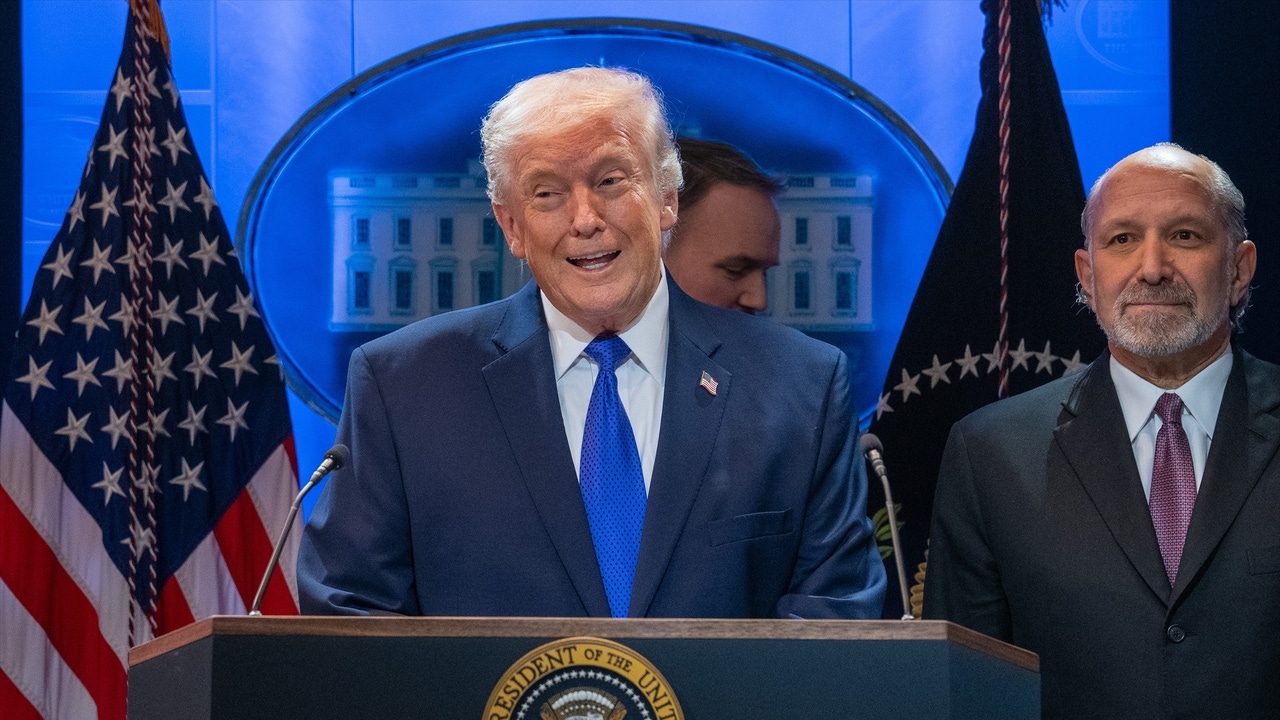
President Donald Trump announced Saturday that he will raise from 10% to 15% the temporary tariff on US imports from all countries, imposed after the US Supreme Court ruled against his flagship tariff program, based on an economic emergency law.
Outraged by the high court ruling, Trump on Friday ordered an immediate 10% tariff on all imports, on top of any existing tariffs. The law allows it to impose a levy of up to 15% for 150 days, although it could face legal challenges.
During that period, his administration will work on issuing new “legally permissible” tariffs, he said. “As President of the United States of America, I will immediately raise the 10% global tariff on countries that, without retaliation (until I came along!), have been ripping off the United States for decades, up to the fully permitted and legally proven level of 15%,” he wrote in a post on Truth Social.
What’s happening with Trump’s tariffs?
The Supreme Court has made the decision to invalidate most of the tariffs imposed by Donald Trump, considering that the North American president exceeded his limits when applying these controversial taxes to products from around the world. The Court’s ruling represents a severe setback for the current US administration, which the Supreme Court understands abused the International Emergency Economic Powers Act (IEEPA) by using it as a basis to impose its application.
The ruling closes the door for the US president to use the IEEPA to impose broad and general tariffs on the grounds of a national economic emergency, restricting this instrument to traditional uses such as financial sanctions or blocking of goods. However, it does not prevent Trump from resorting to other existing legal frameworks to set taxes, such as national security provisions or retaliation measures against unfair trade practices.
Therefore, it considers that these powers should be exercised within specific limits and without using existing laws as a pretext to remake tariff policy without going through Congress.
Which tariffs are affected and which are not?
The ruling invalidates the so-called “reciprocal tariffs” and other widespread levies that Trump imposed under the IEEPA on almost all of the United States’ trading partners, with a minimum rate of 10%. Included are the Republican’s decisions to increase tariffs on Brazil and India by up to 50% in retaliation for the prosecution of his ally, former Brazilian president Jair Bolsonaro, and the purchase of Russian crude oil, respectively.
The measure also hits the 25% tariff applied to certain imports from Canada and Mexico and 10% to China, which the White House linked to the lack of efforts by those countries against trafficking in fentanyl and other drugs. However, tariffs on steel, aluminum and other levies adopted under trade and security laws other than the IEEPA will not be affected.
