
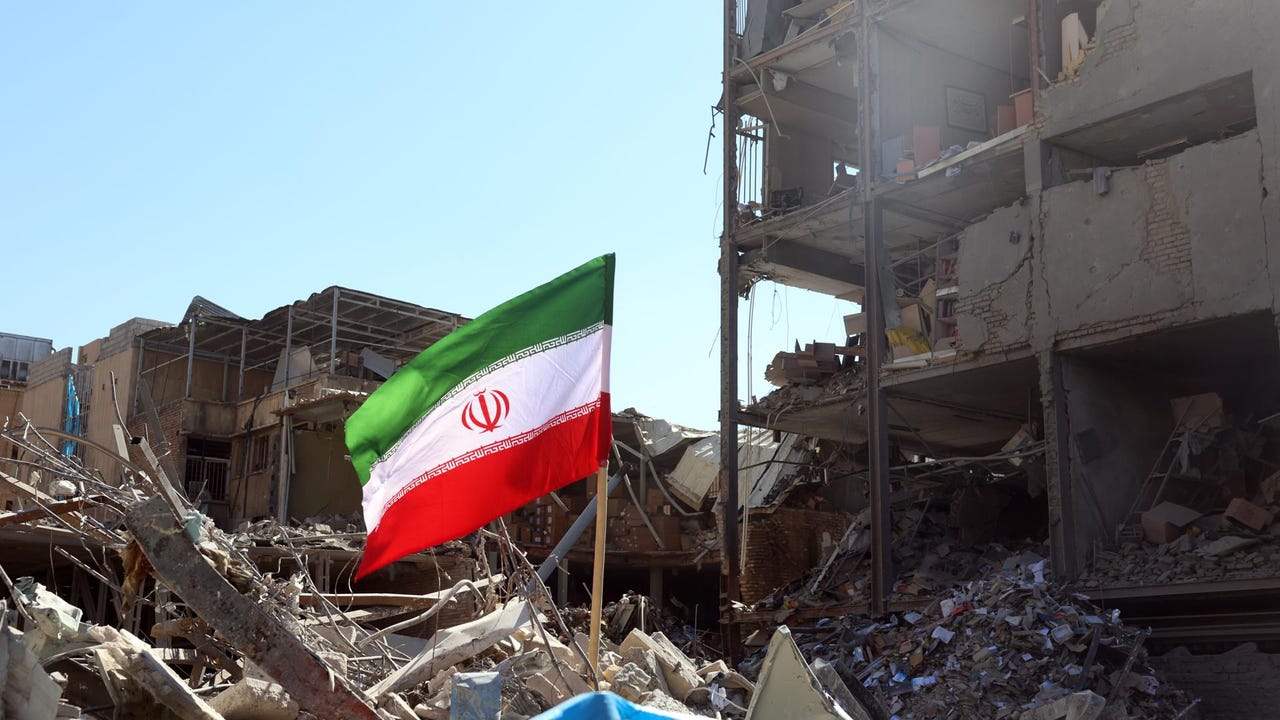
A week after the start of the conflict between the United States and Israel against the government of the Ayatollahs in Iran, the various attacks by the Persian nation on bases in different countries have confused the population and raised questions about what the start means and what the causes of this conflict will be for the world geopolitical map.
Journalist José Miguel Azpiroz, journalist for La Brújula, analyzes the keys to a war that does not seem to have a quick solution and that is already altering the international balance, the global economy and the internal politics of several countries, including Spain.
A war that won’t end soon
The first military operations began with a coordinated air offensive between the United States and Israel following the Iranian attack on targets in the Persian Gulf. Since then, the bombings have continued uninterrupted. “There is no indication that the war is going to end soon,” summarizes Azpiroz.
Although Iran lacks the capacity to impose itself militarily, the overthrow of its regime will not be immediate. The Iranian Army and, above all, the Revolutionary Guard continue to control the levers of power and know the terrain and the internal dynamics of a country that is difficult to subdue.
Analysts believe Western powers are unwilling, at least for now, to deploy ground troops, limiting the scope of the offensive and increasing the risk of a protracted war, similar to the strategic logjams in Iraq or Syria.
A regime fighting to survive
In Tehran, the conflict is perceived as the last battle for the political survival of the ayatollah regime. As Azpiroz points out, Iran “wage a war of survival”, trying to transfer pressure abroad to generate chaos and seek diplomatic oxygen.
International sanctions, the drop in crude oil exports and internal discontent have put the theocratic system on the ropes. Therefore, the Iranian strategy seems clear: spread instability to the entire region to make energy more expensive and force the United States to negotiate.
In fact, tension has also skyrocketed in Iraq, Lebanon and Syria, where Shiite militias allied with Tehran have intensified their actions.
Netanyahu, the great winner
One of the great beneficiaries of the conflict is, according to Azpiroz, the Israeli Prime Minister, Benjamin Netanyahu. “It has achieved unprecedented military and intelligence supremacy,” explains the journalist, after years of building technological capabilities and alliances with moderate Arab powers.
Netanyahu has managed to neutralize the Iranian threat, which for decades has been at the center of Israeli politics, at least temporarily, and has consolidated his internal leadership after months of crisis and protests. For Israel, this conflict represents the culmination of a long-term strategy: preventing Iran from achieving nuclear capability and guaranteeing the security of the Jewish state.
Trump, dragged into the conflict
More controversial is the role of Donald Trump. The American president, who returned to the White House promising to avoid new wars and focus on the economy, has been “dragged” into the conflict, according to Azpiroz. It was Netanyahu who pressured Washington to intervene, taking refuge in Iranian attacks on Western interests.
This military involvement clashes with Trump’s own political base, reluctant to get involved in costly foreign campaigns and give in to the interests of the so-called pro-Israel lobby. His dilemma now is twofold: maintain unity with his main ally in the Middle East or preserve the coherence of his isolationist discourse before American voters.
global economic blow
The economic consequences are already beginning to be felt in all markets. The price of crude oil exceeds $120 per barrel and natural gas becomes more expensive by more than 30% in just one week. Europe is once again looking with concern at its energy dependence, while stock markets react with falls and inflation threatens to rebound after months of relative containment.
“The reductions in interest rates are going to stop,” says Azpiroz, assuming that geopolitical tension will put a stop to the accommodative monetary policy prepared by the ECB and the Federal Reserve. The risk of a technical recession by the end of spring reappears in the analyzes of the large banks.
Sánchez and domestic politics
Finally, Azpiroz incorporates a reading in a national key. Pedro Sánchez has found “his no to war”, a message with which he seeks to recover his electorate further to the left and differentiate himself from the conservative bloc. However, his decision to send a frigate to the Gulf without authorization from Congress has sparked criticism from the opposition and reproaches even within the PSOE itself.
The Spanish diplomatic gesture – presented as support for NATO missions in the waters of the eastern Mediterranean – is also interpreted as a political survival maneuver in a context of internal wear and tear and international pressure. Sánchez tries to maintain a balance between pacifist rhetoric and strategic commitments to Washington and Brussels.
