
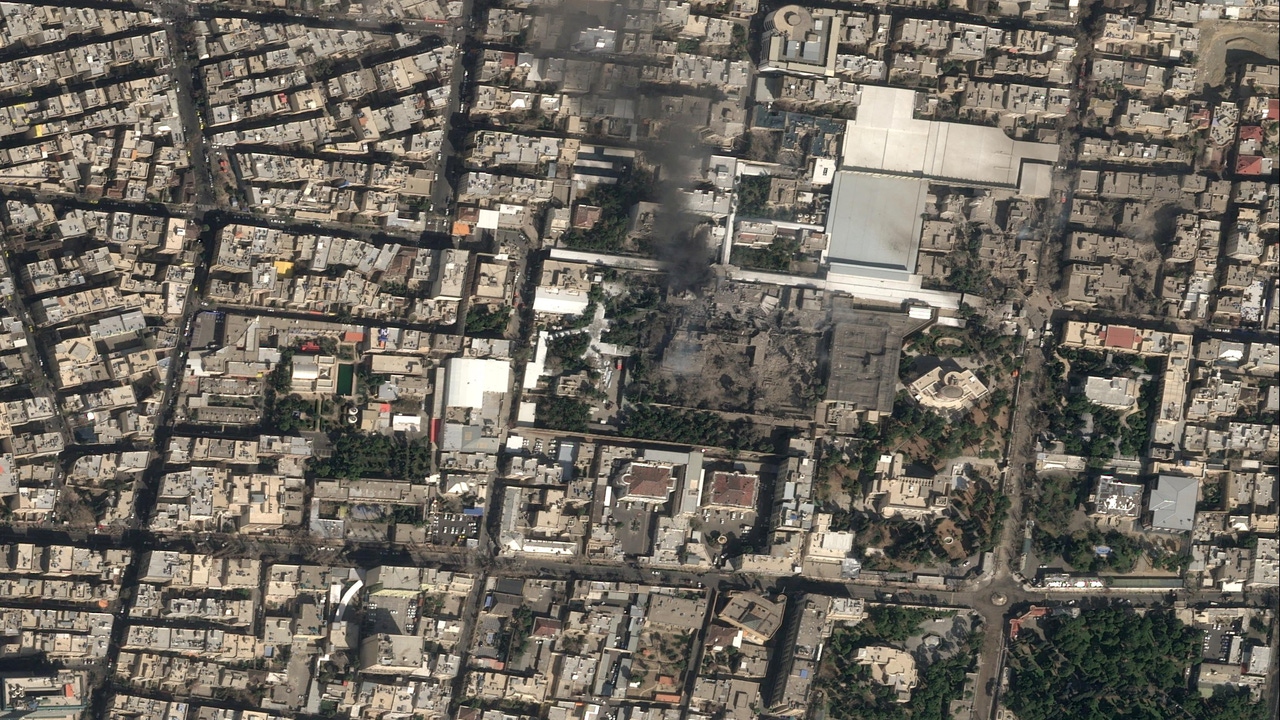
This Sunday morning, Iran confirmed the death of Ayatollah Ali Khamenei as a result of the bombings that Israel and the US carried out jointly against various points in the capital Tehran. President Trump and Prime Minister Netanyahu had already reported moments before the death of the supreme leader, but it was not until hours later when this information was finally confirmed.
As the hours pass after the attack, more details about it become known. The Middle East expert, Javier Gil, explained this Saturday in weekend news the distribution of tasks that Israel and the US had done to cover more in the bombings. While the US had focused on Iran’s weapons capacity, Israel had chosen to bomb those points where it suspected the leadership of the Islamist Regime was located.
One of those points was the ayatollah’s residence, and now it has been known thanks to information from The New York Times that the attack was delayed due to a last-minute tip that the CIA provided to Israeli intelligence services regarding a senior meeting that was to be held there.
The key CIA clue that killed the Ayatollah
For months, the CIA tracked Khamenei and discovered that on the same day of the attack, the ayatollah was going to meet with several senior officials in the complex of buildings where he lived. According to information from The New York Times – which cites several sources familiar with the operation – the US and Israel were going to attack Tehran at night, but this last-minute clue caused them to delay the operation until Saturday morning.
The CIA learned that Khamenei was also going to be present at that meeting, along with many senior officials of the Islamist Regime, which made it possible to eliminate many of them in a single attack.
Few planes, but very well armed
The operation began around 6:00 a.m. in Israel (04:00 GMT), when Israeli fighter planes took off from their bases, and long-range missiles hit Khamenei’s complex around 9:40 a.m. local time (6:10 GMT), in an attack that did not require many aircraft, but well-armed ones, according to the newspaper.
The senior Iranian defense and security officials were at that time in one building of the complex and Khamenei was in another, the newspaper adds.
Specifically, Israel had determined that the meeting would include the commander of the Revolutionary Guard, Mohamed Pakpur, the Minister of Defense, Aziz Nasirzadeh, the Chief of the General Staff of the Iranian Armed Forces, General Abdorrahim Mousavi; the secretary of the Defense Council, Ali Shamjani, and the head of its Office, Mohamed Shirazi, all of them confirmed dead.
The United States and Israel also had information on the whereabouts of several Iranian intelligence officials, and after attacking the complex, they also bombed the locations where those people were, killing all of them except for a senior official who escaped, and whom the New York Times does not identify.
The importance of the 12-day war
The twelve-day war between both countries against Iran in June last year allowed the CIA to learn a lot about how both Khamenei and the leaders of the Iranian Revolutionary Guard communicated and moved in times of danger, the newspaper indicated.
As occurred with the operation that preceded the capture in January of the Venezuelan president, Nicolás Maduro, in the following months the CIA tracked Khamenei and gained confidence in how he moved and what his favorite locations were, the newspaper added.
Iran has promised to avenge Khamenei’s assassination and has so far attacked the United Arab Emirates, Qatar, Bahrain and Kuwait, among other allies of the United States and where the Western power has military bases.
