
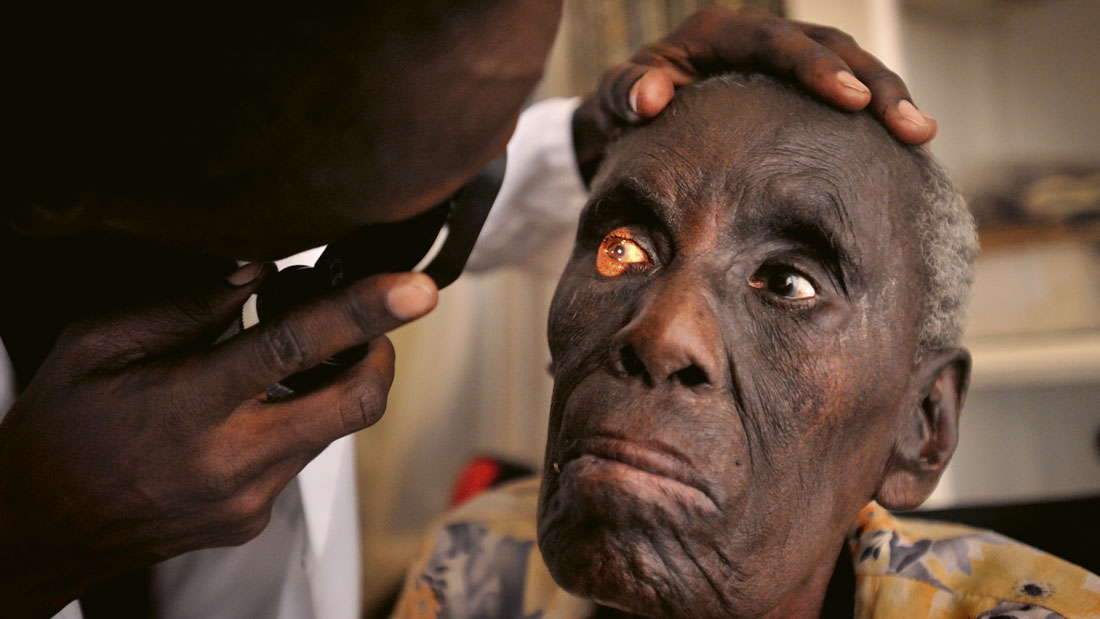
15.3% of the world’s blind people reside in Africa.
By Gabriel González-Andrío from Kinshasa (DRC)
The natural deterioration caused by age, prolonged exposure to sunlight, misuse of certain medications, alcohol abuse and the shortage of ophthalmologists compromise the vision of millions of Africans. Four professionals working in the Democratic Republic of the Congo and Cameroon reflect on this reality.
To see or not to see, that is the question. Thousands of Africans suffering from serious vision problems await the arrival of foreign medical missions dedicated to ophthalmic surgery. The shortage of specialists and the necessary equipment has left the problem in much of the continent in the hands of a few local ophthalmologists and some NGOs.
According to the World Health Organization (WHO), there are approximately 5.6 million blind people in Africa, representing about 15.3% of the world’s total. Cataracts, among the leading causes of blindness, affect almost two million people (36% of blind people on the continent). In sub-Saharan Africa rates of untreated visual impairment are over 80%, while in high-income regions they are below 10%.
«I could tell many experiences, but I just did a medical-surgical campaign in the south of the Democratic Republic of the Congo (DRC), on the border with Angola, and almost 40% of the patients complained of vision problems. Many cases were undiagnosed hyperopia and myopia and cataracts. The closest optician to calibrate the sight was more than 300 kilometers away along dirt tracks. “That says everything,” explains Ana Gutiérrez, a doctor at the Lisungi Catholic Hospital, in the Mont-Ngafula neighborhood (Kinshasa), and a religious slave of the Sacred Heart of Jesus.
“Also because of my experience in the jungle of Cameroon, where I have done ophthalmological missions, I have encountered very young people, under 40 years old, practically blind due to glaucoma,” he comments. «Every year I see about ten cases of blindness in general medicine consultations due to eye trauma caused at school or due to domestic violence. “It’s something very sad,” he adds.
However, this professional has also experienced happiness for people who regain their sight thanks to surgical interventions. «I have seen happy people regaining their sight in cataract surgery campaigns. They jumped for joy in disbelief, like the blind man of Jericho in the Bible. “That gives a lot of joy,” he points out.
This is the case, for example, of Jean Paul, an official at the Kinshasa City Council, where he continues to work at the age of 70. This patient went to Dr. Gutiérrez’s office in 2024 due to a significant vision problem that prevented him from doing his job. «I couldn’t write because I couldn’t see, I couldn’t go to work because crossing the dangerous and chaotic streets of Kinshasa was almost impossible. At home I did not dare to stay alone because I did not recognize the people who approached and I was afraid of being assaulted. Furthermore, because of the loss of vision, my family neither cared nor respected me,” recalls Jean Paul.
And he continues: «The doctor diagnosed me with bilateral cataracts and sent me to Saint Joseph’s hospital for surgery. A month later I was operated on for $300, the equivalent of my two months’ salary. Now I’m happy.”
The nun notes that Jean Paul “is very happy and has been able to return to work, his colleagues now treat him very well, he has recovered his social life and resumed his activities in the parish and in a choir. “It is incredible to see how a small operation returns so much life and dignity.”
Sister Ana is not the only one who packed her bags to land in Africa and carry out humanitarian medical activities. Richárd Hardi, of Hungarian origin and also a doctor and Catholic missionary, chose the same destination as Ana in 1995: the DRC.
The Saint Raphael Clinic
Hardi graduated in General Medicine in 1990. Between that year and 1995 he specialized in ophthalmology in Tatabánya (Hungary). Meanwhile, in 1992, he entered the City of Beatitudes Catholic community. After graduating as an ophthalmologist, he asked to be sent on a mission to the former Zaire.
«Here our community manages and supports a large hospital in Kabinda, Lomani province. From 1995 to 2005 I worked in this mission and in this hospital. In 2006 I opened an ophthalmology practice. Between 2015 and 2020 I was able to build the clinic, a reference for some eight million people in three provinces,” explains Hardi.
The Saint Raphael Eye Clinic is well known for treating both the poorest and wealthiest patients with the same level of care. It maintains affordable prices for everyone and thanks to a modern methodology they obtain good results, especially among those who have undergone surgery.
«We also make numerous trips to major cities within a 600 kilometer radius to visit patients and offer our services. The clinic has all the services in the same space: pediatric and adult ophthalmology, glasses, pharmacy, operating room, etc.,” says Hardi.
Despite the efforts of missionaries and aid workers, the data reveal an extreme situation for people with cataracts in the DRC. In 2024, there were 105 ophthalmologists in the country for 110 million inhabitants.
The training of future generations in this specialty does not seem viable today either. Richárd Hardi believes that “the training of specialist doctors is very slow and quite expensive. There are only two university clinics in the Congo where ophthalmologists are trained, in Kinshasa and Lubumbashi. Everything must be done to change this. Furthermore, traveling abroad to train is difficult and very expensive.
Meanwhile, at Hardi’s clinic they operate cataracts with modern methods for about $100 – about 10% of the price in Europe – although patients with the means have to pay more. Children’s operations are free. “Logically, to be able to work like this, we need subsidies and donations,” he points out.
Ana Gutiérrez considers, however, that “training for diagnosis is essential, as well as knowing how to derive what is important or quickly treat infectious processes so that they do not progress to blindness. This is indeed relevant.
30,000 operations
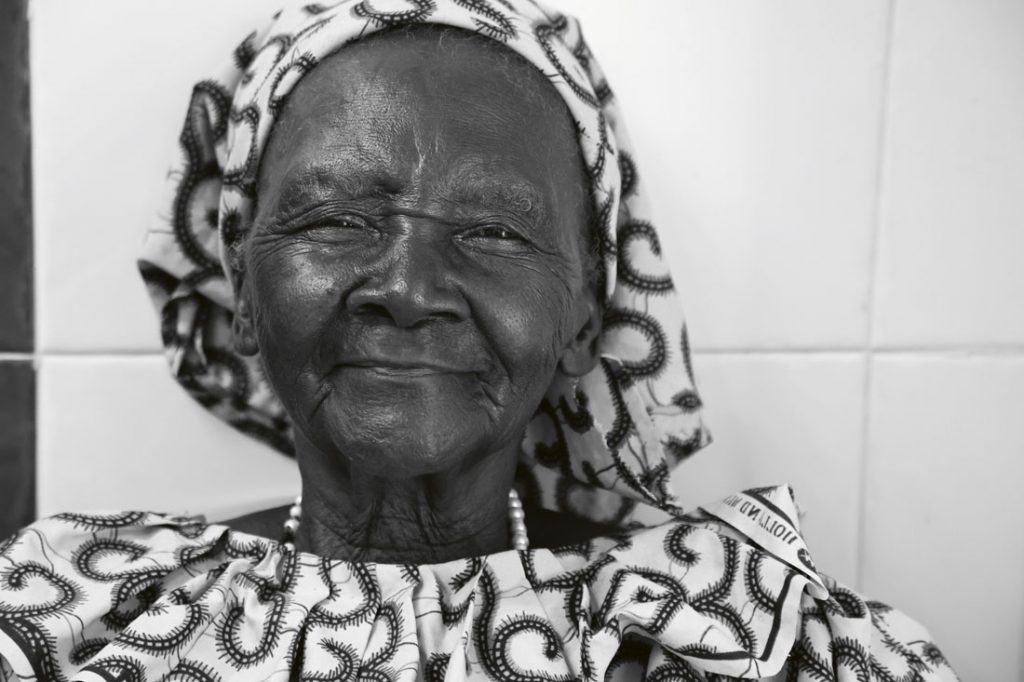
Another key name in the fight against blindness on the continent is Elena Barraquer. His foundation was created in 2017 with a very clear objective: to fight against avoidable blindness caused by cataracts in people without resources. Currently, they have active projects in 28 countries, between the African continent and Latin America. They have carried out more than 80 expeditions and operated on almost 30,000 people.
“From the beginning of my career I have been very aware that seeing is living and I knew that I wanted to dedicate an important part of my professional life to helping those who do not have access to something as basic as an operation that can change their lives in a matter of minutes,” explains the doctor.
«We focus on Africa because it is one of the continents where the lack of eye care is most critical. In many of the countries where we work, going blind means losing everything: autonomy, livelihood and, in many cases, dignity. For me there is no greater reward than seeing that first look when the patch is removed the day after an intervention,” he emphasizes.
Barraquer does not see it viable to provide training in such a complex and delicate subject. “We are not so focused on surgical training because, honestly, the technique we use – phacoemulsification – is not yet viable in many African countries due to the high cost of the equipment and the difficulty of access to it, both in infrastructure and maintenance.” In line with what was stated by Gutiérrez, he adds that “that does not mean that we are not committed to training. We focus on teaching diagnosis, monitoring of certain pathologies and, above all, how to manage large volumes of patients, something that is key for us. Our goal is for local health personnel to be able to detect, prioritize and refer cases with more judgment and safety.” And it sends a hopeful message: “Hopefully in the future, when conditions allow, we can also train local surgeons.”
Talent drain
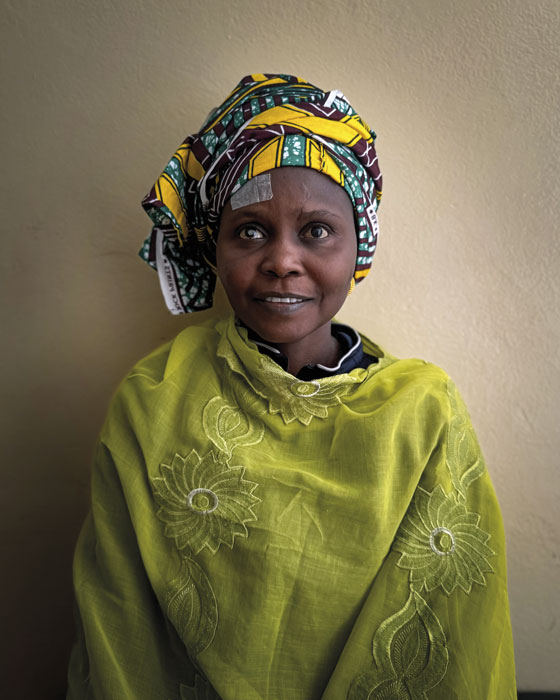
Fanny Mbacham is an ophthalmologist at the Poitiers Bessengue Polyclinic in Douala, Cameroon, where she offers specialized care and diagnostic procedures to improve eye health in the region. He has advanced training in clinical research at Harvard Medical School. “Cameroon faces a critical shortage of ophthalmologists, with a concentration of specialists in the big cities, Yaoundé and Douala, while rural areas are cruelly under-resourced,” explains Mbacham.
According to the International Council of Ophthalmologists (ICO), the country has about three specialists for every million inhabitants – the country has a population of close to 31 million. In 2018, the NGO Orbis numbered 73 ophthalmologists in the country. “There are currently about 130 professionals, but local training remains limited and specialists look for better paid positions in private centers or abroad,” says Mbacham.
From the Poitiers Bessengue Polyclinic, the doctor considers that “European medical missions are providing invaluable help by providing immediate relief and temporarily reducing waiting lists for cataract operations. However, for a lasting solution, it is essential to hire and retain local professionals. “This will ensure continuous care adapted to the specific needs of the population.”
Prevention
All professionals agree that prevention is the only way to stop the statistics. «It is vital in the case of cataracts. Monitoring diabetes, infectious diseases or cataracts due to iatrogenesis – misuse of medications – is very important,” explains Gutiérrez. Other keys are “protection from sunlight, reducing the enormous consumption of alcohol and fighting against violence that causes blindness due to eye trauma. Another important issue is the early diagnosis and treatment of glaucoma, since blindness can be avoided if treated in time,” he adds.
Elena Barraquer comments in this sense that “one of the biggest challenges in the countries where we work is that many people arrive too late. Years have passed without diagnosis or treatment and when they finally go on a (medical) expedition, there is nothing we can do for their vision. But yes, prevention and early access to diagnosis are key to preventing these cases from becoming irrecoverable.
river blindness
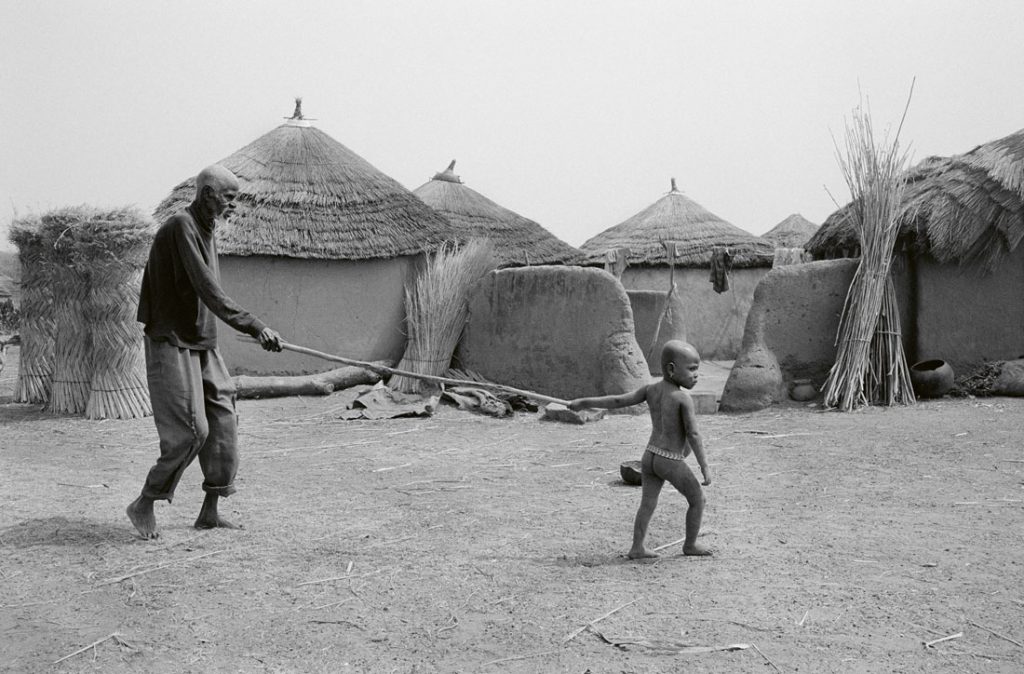
Onchocerciasis, also known as river blindness, is a parasitic disease that affects millions of people, especially in Africa, Latin America and Yemen. It is transmitted through the bite of a fly. simuliumwhich lives and reproduces near rivers. People infected by these d´´iptera develop dermatological and ocular signs and, after years of parasitosis, they become blind. In some provinces of the Democratic Republic of the Congo, this disease is widespread. However, the most common cause of blindness in Africa, as in the rest of the world, is aging, which causes the proteins of the lens to degrade and regroup, causing its opacity. In addition, other factors increase the risk of suffering from cataracts, such as exposure to ultraviolet rays, malnutrition or diabetes. Other relevant factors in the increase in cases are the excessive consumption of corticosteroids and alcohol.
