
The Iranian-made ‘Shahed’ missiles have become one of the protagonists of the Middle East war. They are suicide-type kamikaze missiles, that is, they are launched, search for the object to be destroyed and are destroyed upon impact. The best known model is the Shahed-136 and has been used massively by Russia in the war against Ukraine.
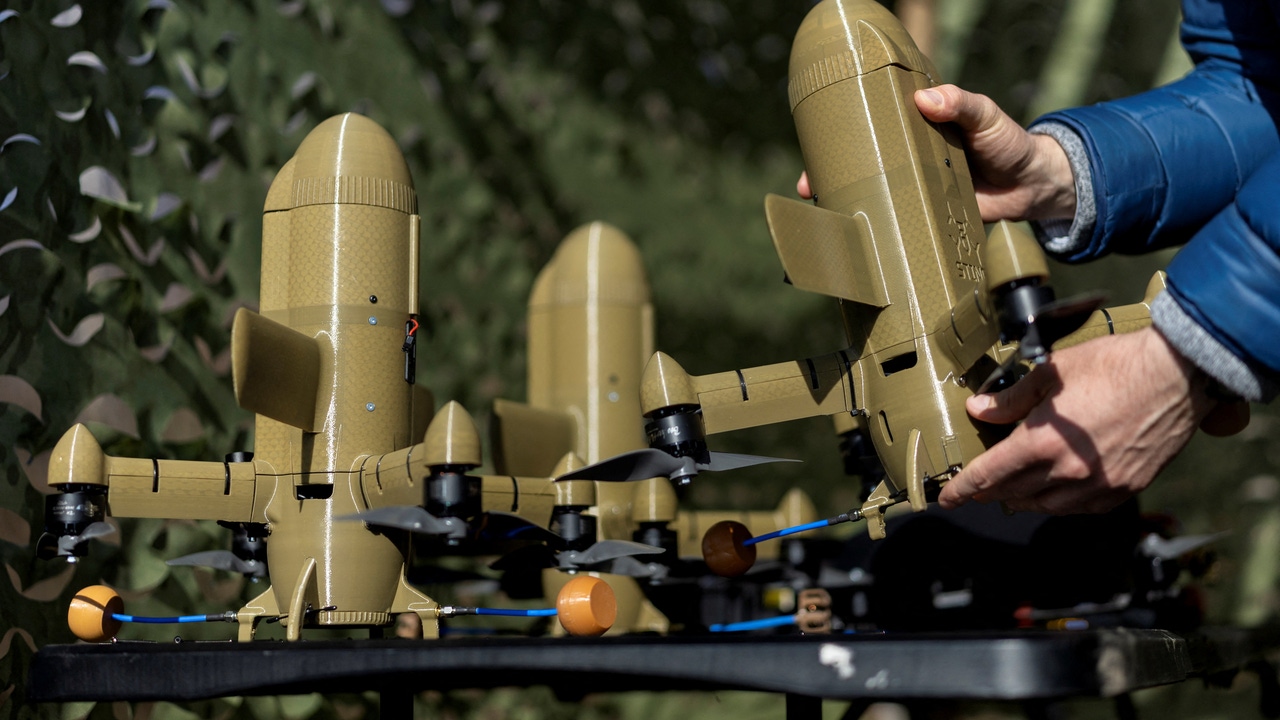
That is why, now, the key to destroying them lies with the Ukrainian country. After four years of armed conflict against the Russians, Volodymyr Zelensky’s people have developed a cheap and effective technology capable of intercepting them: the ‘Sting’ drones. Such is its effectiveness that even the United States and Israel have contacted Ukraine to explore the possibility of a sale. In fact, Zelensky himself has offered his help as part of a pact encompassed in the Russian-Ukrainian conflict.
‘Shahed’ missiles: very cheap, destructive and difficult to detect
The ‘Shahed’ missiles have a range of approximately 2,000 kilometers, which allows them to reach targets very far from the launch point. At the front they have an explosive charge of between 40-50 kg, enough to destroy a multi-story building. Furthermore, its low speed – between 180 and 185 kilometers per hour – and flight at ground level make its detection very complicated.
They are shaped like a delta wing, measure 3.6 meters long by 2.5 meters wide and make a very characteristic noise when flying, like the engine of a forced motorcycle. In addition, they are cheap, about $50,000 per unit, or in other words, one hundred times cheaper than ‘Patriot’ missiles, the defense systems used by the United States.
The ‘Sting’ drones, the key to destroying the ‘Shahed’
Although, Ukraine has developed a cheap and effective technology, which during the four years of war against Russia has neutralized 90% of the attacks, as Zelensky himself has assured: these are the ‘Sting’ drones. Its manufacturers, the private company Wild Hornets, are the developers of this weapon.
The ‘Sting’ drones fly at a speed that reaches 280 kilometers per hour, thanks to a 360-degree antenna and a flight range of 37 kilometers. This combination is perfect because they can chase the ‘Shahed’ from a distance before crashing into them.
The controls to operate them are very easy. According to Paskudnyk, a test pilot, “if you already know how to fly a first-person view drone, moving to this type of device is just a matter of days.”
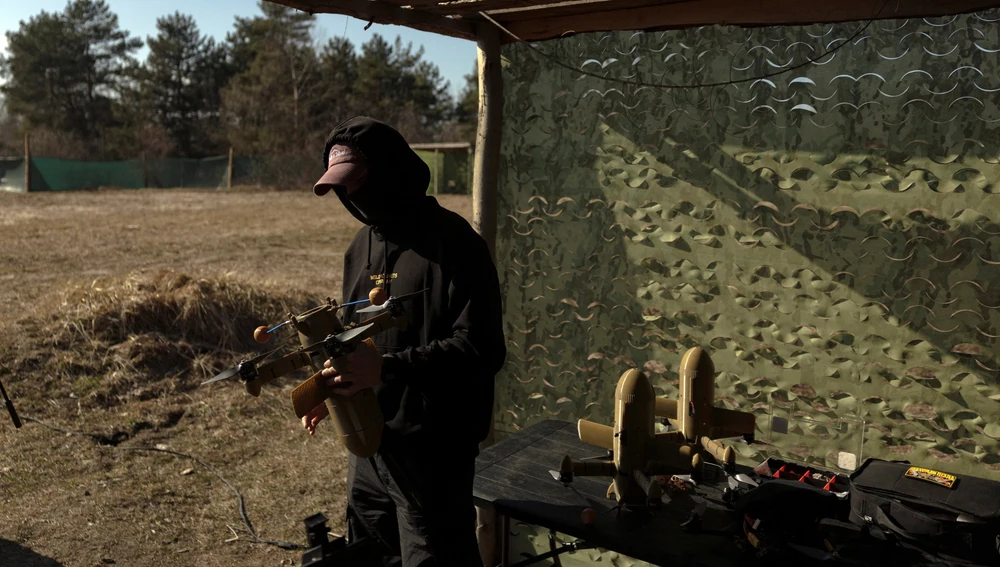
Its price is infinitely cheaper compared to other systems. They cost around $2,000 and a company representative, who asked not to be identified for security reasons, has revealed that they are developing a second-generation model capable of flying even faster.
Possibilities of exporting to other countries?
Regarding the possibility of exporting the ‘Sting’ to other countries, the company representative has been cautious, since “it would only export at the request of the Government and, especially, if kyiv receives more American Patriot missiles to shoot down ballistic missiles.” Although they have received “requests” they have not responded to them “for now.”
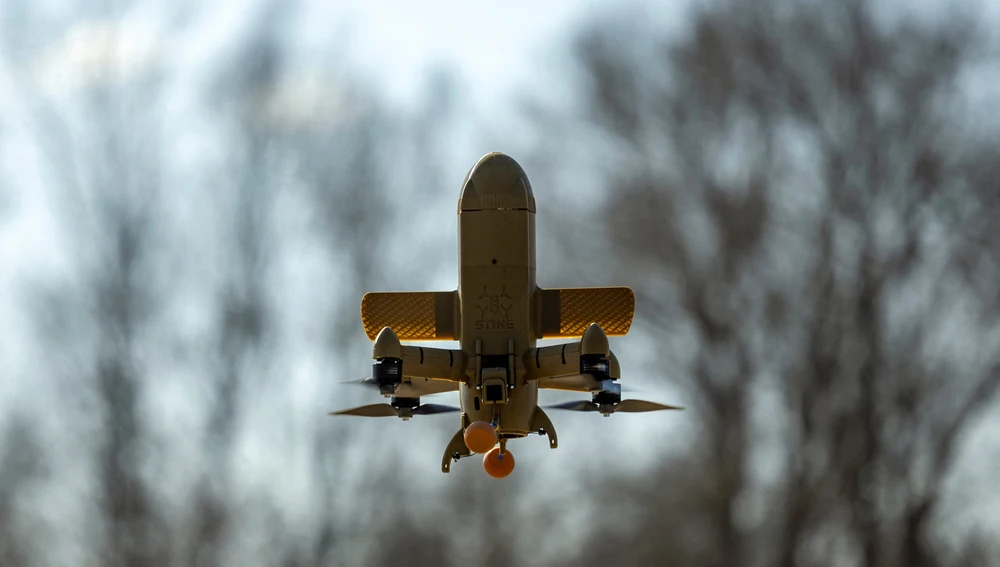
Zelensky, for his part, has highlighted the characteristics of the ‘Sting’, ensuring that they are “much more effective” than any other used by the partners, and has praised the production capacity of his country, which manufactures 2,000 interceptors every day. All this explains why there are currently 201 Ukrainian experts in the Middle East – the United Arab Emirates, Qatar, Saudi Arabia and Kuwait, soon.
“We do not want the Iranian regime’s terrorism against its neighbors to succeed. (…) “This is part of the deal on drones that we propose to the United States, in which we work together, and which is on the table,” stated the Ukrainian leader.
