
2025 ended with a resurgence of jihadist violence in West Africa and a serious deterioration in security. The beginning of 2026 confirms this trend and is marked by two revealing events: the attack on an air base in Niger and a massacre in Nigeria. If in 2025 groups linked to Al Qaeda predominated, in 2026 those affiliated with Daesh have taken center stage.
The assault on Air Base 101 evidenced a shift from a predominantly rural insurgency toward an “urban war of terror” directed against centers of political power and critical infrastructure. The base, located at Niamey airport, houses military equipment and the headquarters of the Unified Force of the Alliance of Sahel States (AES). Claimed by Daesh, the attack began at midnight on January 28-29, 2026, when an armed commando broke into the base and opened fire on the facilities. The clashes lasted nearly two hours.
The strategic significance of the attack is clear: no state enclave is beyond insurgent reach. Local sources indicate that beyond the military systems, the objective was the uranium stored at the airport. The metal is at the center of a dispute between the French company Orano and the Nigerien junta.
The attack also highlighted the new regional security architecture. The Nigerien Army led the response, with support from elements of the Africa Corps deployed in the country, as well as AES allies. The 300 Italian soldiers of the Bilateral Support Mission in Niger did not participate in the fighting, confirming Russia as the country’s security partner.
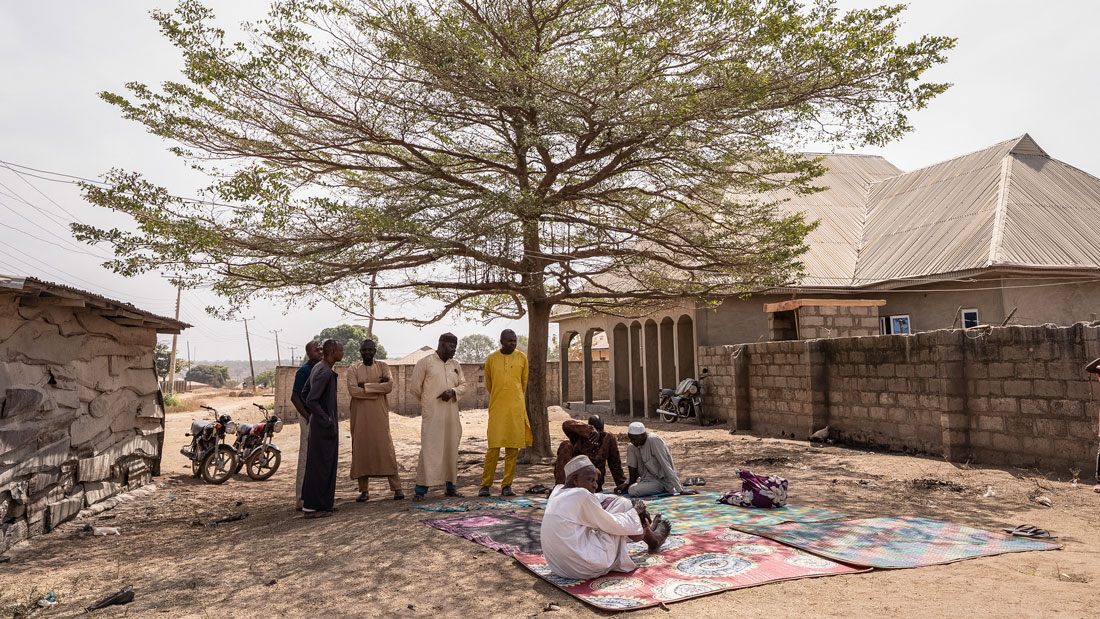
Days later, the Woro massacre (Nigeria) reaffirmed the expansion and complexity of the phenomenon. On February 3, nearly 200 civilians were killed in this village in Kwara State, after being summoned to an alleged prayer meeting. The attackers executed men and boys in a coordinated manner and kidnapped women and girls.
The authorship generated controversy. Although the Government pointed out Boko Haram, the analysis of local testimonies points to the possible involvement of the Islamic State in the Great Sahara (EIGS). This confusion reflects the overlap of actors in the Borgu region, where various jihadist factions are active, including EIGS, Group for the Defense of Islam and Muslims (JNIM) or Boko Haram, among others. This reality complicates the attribution of responsibilities and makes effective responses difficult.
The political message behind these attacks is clear for governments, international allies and other jihadist groups: although weakened, Daesh remains active in the region and maintains its destructive capacity.
At the international level, the beginning of 2026 confirms a geopolitical reconfiguration in the region: the United States has reactivated its presence in the Sahel with limited support for Nigeria, conditioned by mutual distrust and divergent narratives about the victims of terrorism, mostly Muslims, despite Washington’s political emphasis on the protection of Christian communities (see MN 720, pp. 8-9). In parallel, Washington has begun a rapprochement with Mali under a logic of “mutual respect” and “sovereignty”, with high-level diplomatic visits in 2025 and 2026. However, Russian influence seems consolidated, as evidenced by the messages of gratitude from General Abdourahamane Tiani and other AES leaders after the attack on Base 101.
