
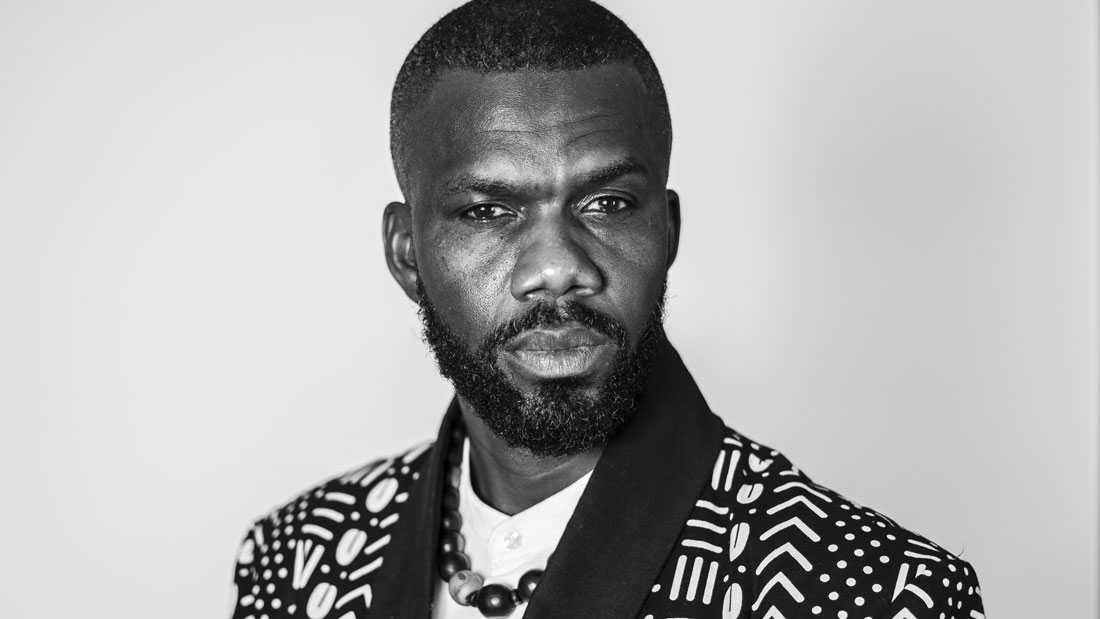
Djibril Mbaye, percussionist.
«I was born and lived until I was four years old with my grandmother in Mbour (Senegal), and I grew up in Dakar, in the Medina neighborhood. I am 50 years old and I have been in Madrid for 25. I am a percussionist and singer. I have a musical group called Sico Bana Africa. In addition, I am an actor, I have an educational project and a clothing brand.
What is music for you?
Music for me is everything. I come from a family of griotsthe messengers, those who praised the kings when they were at war. The griots They are like books, the library of Senegal. I come from a family of well-known percussionists and singers. My father was a great percussionist. Although, really, I didn’t want to be a musician. I helped my father, who was a house painter, paint houses and I wanted to study. But the financial management at home was not going well, I was the oldest of seven siblings and since I saw that my cousins were traveling throughout Spain with an entertainment company working as percussionists, I thought it could be an easy way to help my family. I entered a percussion and dance training center, of which there are many in Senegal. And music saved me.
Apart from a means to help the family, was it a dream to come to Spain?
In Senegal, it is common to dream of going to French-speaking European countries. My idea was to go to France or another country, but the company where my cousins were did tours in Spain. Like many, I dreamed of going out to improve my life and that of my family. In our culture, if one does better, it helps the rest. It’s not that we were bad, we haven’t gone hungry or anything, but we needed to evolve. In Senegal, many young people who have studied, who have earned a degree, find it very difficult to find a job and a good salary to survive.
You’ve been here 25 years. Is the idea you had of what life would be like in Spain before coming similar to what you have experienced?
For us, coming to Europe is an incredible dream. You think that when you arrive you will succeed, that you will make money right away, that things will be very easy, because in Senegal you meet people who have emigrated, who come back from vacation dressed well, who sometimes bring a car or build a house. I came to Spain with a job and I was working as a musician for six months. I had a salary, an apartment, the papers, and during that time everything was going well. My contract was for six months and I had to return, but I stayed because I might not have the opportunity to return. When you try to make a life for yourself you discover what Europe really is. I arrived in Madrid in 2001, in January, it was very cold. My idea was to make a living with music, but without papers I couldn’t work. My cousin welcomed me into his house and fed me. The only thing I could do during the year I was with him was sell CDs on the street. One day the police arrested me and I spent three days in jail. It was a big scare, because I thought they were going to return me to my country.
Even with difficulties, you decided to continue betting on staying here.
I didn’t back down. In the end percussion helped me a lot, it opened doors for me. With three cousins we set up a group, Mama Africa. At that time they really liked African music and dance. Little by little we became known. We gave our first concert at the Sala Galileo and a lot of people came. We also played at Sala Clamores, charging 10 euros per ticket. We began to get a lot of work, many festivals, percussion classes, dance classes.
Have you dedicated yourself to music since then?
I have been making music in Spain since 2002 and for the first ten years I was able to make a living from it. But I have also done things apart, because times are changing and Spain is no longer the same. I have worked in warehouses, as a delivery boy, as a doorman… It is much more difficult to make a living from music, especially when the pandemic arrived. In summer it goes better. For example, we have a small tour for two months at the Bioparc in Fuengirola, but then, when winter approaches, we have to look for other jobs. Music opened the door for me to work as an actor, in short films, in some movies and in advertising. But it is not easy to live in the world of cinema as an African actor. You have to do a little of everything to survive.
What is the music you make like?
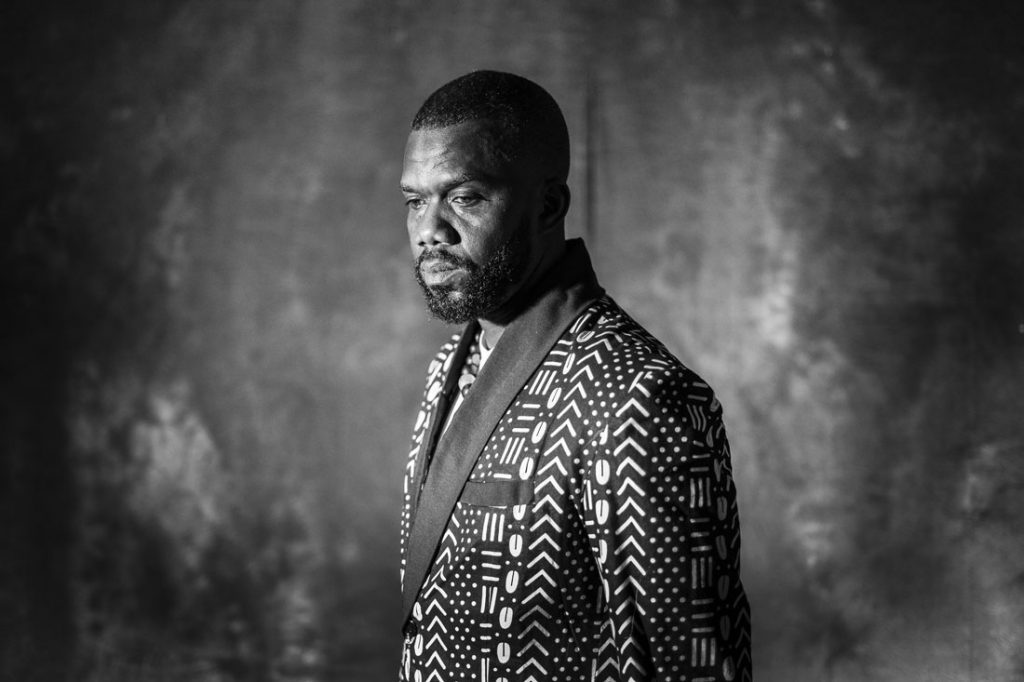
Our base is traditional Senegalese music. In my country there are more than 16 ethnic groups, each one with its own sound. We use the kora, which is the African harp, the djembes, the dunun or the sabar, which are different drums. We sing stories about our ancestors and everyday life… We mainly make traditional music, but we are also giving it another touch, more fusion. After Mama África I created the group Sico Bana África. Now we have a Spanish singer, Nerea Mafarki, and we mix songs in Spanish with African music. Sometimes she sings in Wolof, our language, and I sing in Spanish. We give it a touch of flamenco, a touch of pop…
Is traditional Senegalese music easy to learn?
It’s easy if you have the rhythm and desire. Anything you want to do is easy. Like when I came here and needed to learn Spanish. I got excited, I went to classes, I watched TV in Spanish, I talked to my partner, who is Spanish… With enthusiasm, everything is easy.
Do you teach percussion classes?
Before, yes, I gave many classes. But now we only do intensive workshops, because it is not so easy to get a sufficient number of students to come regularly. But I am also with a very interesting project called Educa Africa with which we teach African culture, history and music in schools. The intention is for children to learn everything positive about the continent.
What do you teach them in schools?
The image they have of Africa depends above all on what they see on TV and what their parents tell them. A boy asked me one day if there were schools and universities in Africa. He asked me where we were sitting. I ask them questions to see what they know about Africa and we place their answers into two groups: one the positive and the other the negative. And the negative always wins. When you ask them, for example, “What is Africa to you?”, the first words are always “war” and “hunger.” Always. It’s incredible. I’m talking to you about seven-year-old children. “War,” “hunger,” and then “animals.” That is the starting point. And I tell them: “Look, Africa is not what you imagine.” I joke with them. «The colacao that you have for breakfast every morning, do you know where it comes from? Well, it comes from Africa. “If we didn’t have cocoa trees, you wouldn’t be able to have breakfast.” I show them videos and talk to them about what mobile phones carry and all the resources we have that Europe takes advantage of. We have been working on this project for ten years now. And it’s not just for children, but also for adults. I have many Spanish friends who have traveled to the continent and there are people who are now more informed, thanks to the great work that is being done in this regard, but there are still many people with closed minds, so we must continue teaching.
Among the children you speak to there will be children of African migrants. How do they react?
What strikes me most is that they feel proud. They say thank you and you can see the happiness on their faces. It’s a help for them, because maybe they don’t know how to talk about certain things to their classmates, things that I do. It is also interesting for children who have already been born here, who are more Western than African, and whose parents have not talked to them much about these issues. My dream is to give these workshops in all schools in Spain.
We haven’t talked about the fact that you also have your own clothing brand.
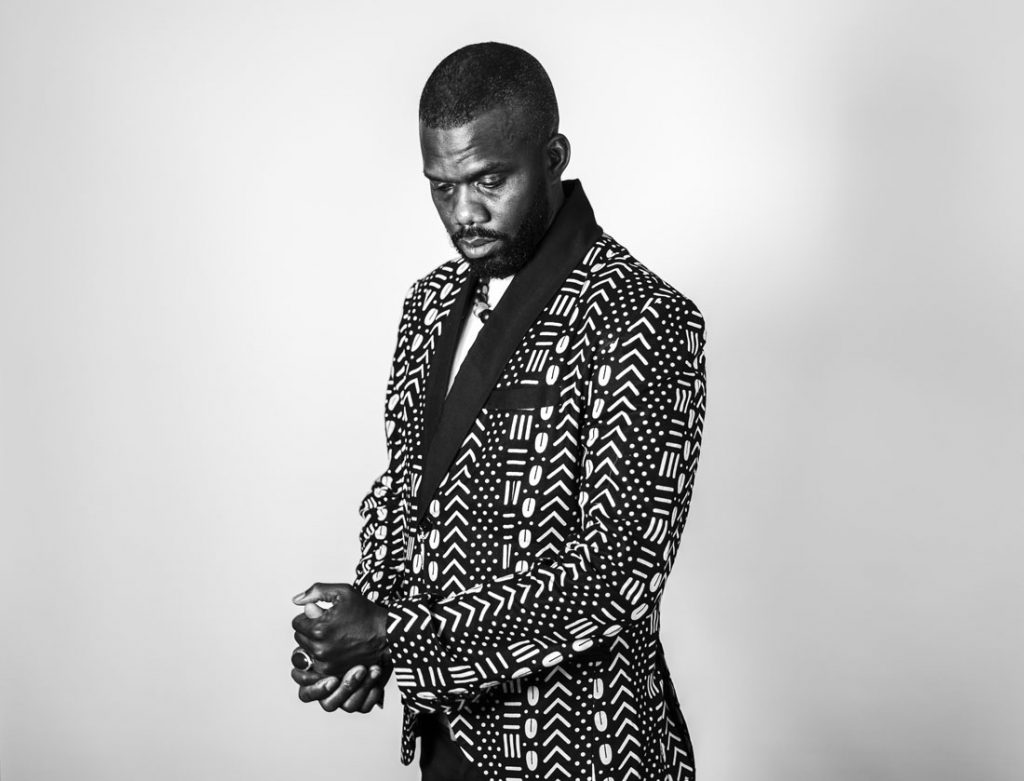
Fabrics are a very important part of our culture, with these striking colors. Ten years ago I started Sico Collección, a line of shirts, t-shirts, pants and blazers. I work on this with my sister, who is in Senegal. I make the designs and she makes the clothes and sends them to me or I bring them when I go on vacation. I sell at fairs, at Christmas markets… When sales have worked best was with the arrival of the coronavirus. I sold a lot on-line. If the music doesn’t work, we throw away the clothes. If clothes don’t work, we do different projects to earn a living.
Imagine the future. Do you still see yourself in Spain?
I think something curious happens to many immigrants. We had the dream of coming to Europe to work and earn money, but as the years go by we realize that we have to start thinking about returning and helping our country from there. I’ve been here for 25 years and I’m already thinking about how I can return to Senegal and carry out projects there. I think of some rural houses, perhaps an agricultural project. There is much to do. I feel that the time is coming to not spend so much time here and perhaps think about living half the year in Africa and the other half in Spain. I have friends who are considering it and friends who have done it, who have returned, have their projects there and they are doing well. I know it will cost me, but it is possible. In the future, I don’t want to stay here in a residence. If all goes well, I prefer to retire in Africa.
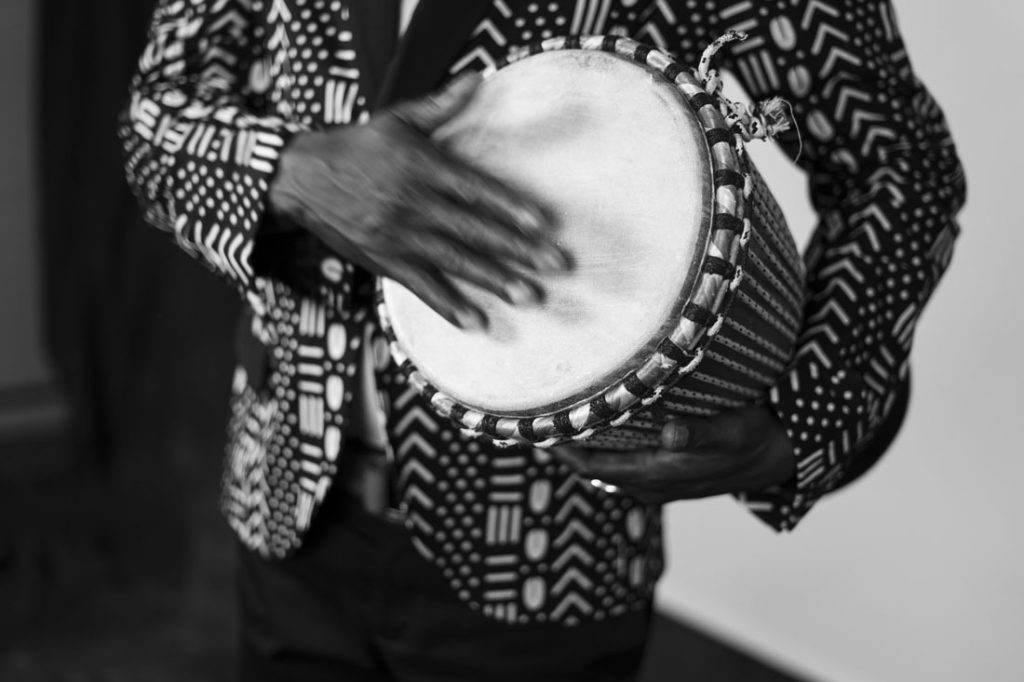
With the
«The djembe, in addition to being an instrument that I respect a lot, is a symbol for me. It has opened the doors for me. It has saved my life. Its name means ‘union’ and it is true. Wherever there is a djembe, where there is percussion and dance, there are always people united. The djembe unites people. It’s everything to me, really. “He’s like a son.”.
