
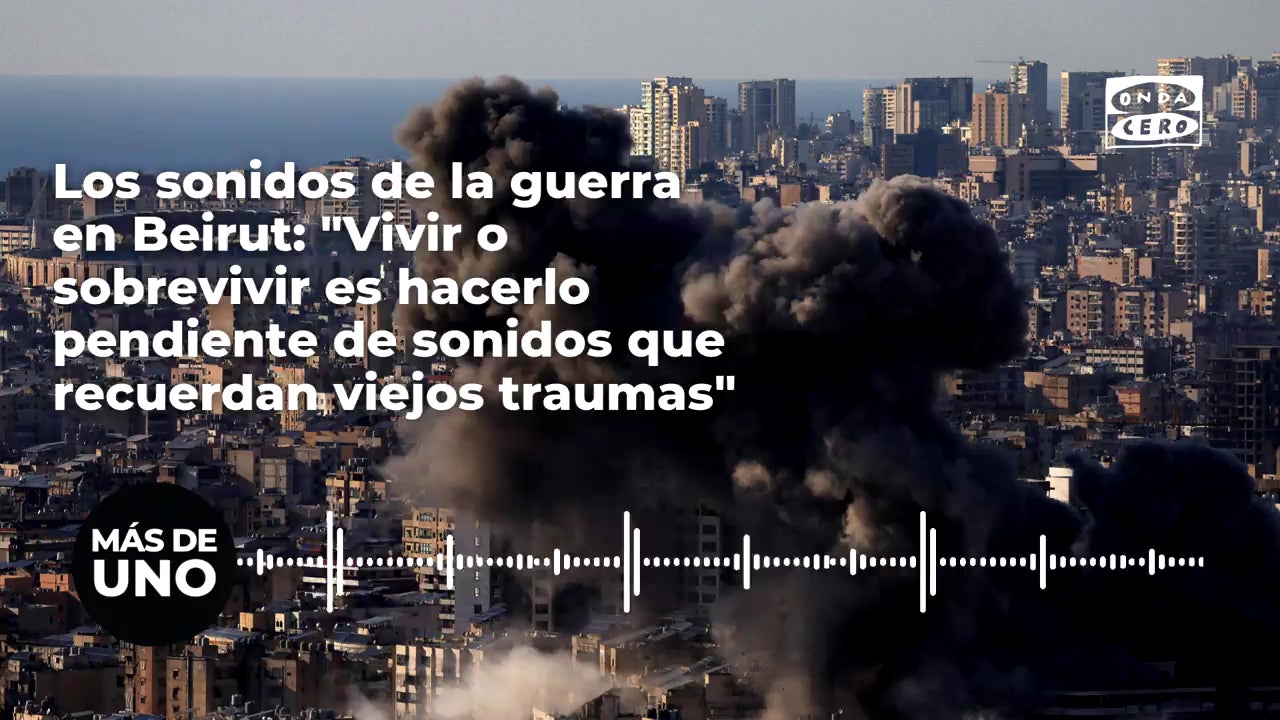
When 13 days of war have passed, the sound with which the day begins in Beirut is the sound of destruction, that of the alerts of the military planes that constantly fly through the sky. Marta Maroto, Onda Cero correspondent in Lebanon, puts us in the shoes of those who listen to the day-to-day life of the war.
For days now, Lebanon has woken up from a nightmare that it thought it had left behind. More than a year later, war has returned to a country to which peace never ended. To live or survive is to do so while listening to sounds that remind us of old traumas. The drone of the Israeli surveillance drone, constant even during the ceasefire, is now heard louder in the sky over Beirut.
Explosions, shots in the air and screams of anxiety: daily life in Beirut
The war is the notifications on social networks of the Israeli army, which sometimes warns with maps where the bombs will fall. These evacuation orders are followed by shots in the air, especially at night to wake up the neighbors, and the rush to grab a backpack or not grab anything begins. The noise of the fleeing traffic.
War is the explosions and also the silence that follows the bombs, broken by anxious screams on the phone and the fear that no one will answer on the other end of the line. In the safe areas of Beirut, the schools are filled with displaced people: there are already 700,000 in a country of barely five million inhabitants.
The streets of the center are a coming and going of vans with mattresses, blankets, gas ovens. There are still days until Ramadan ends and, although the exodus allows the fast to be broken, the sound of the Adam, the call to prayer from the mosques when the sun goes down, continues to invite families.
“Good afternoon, may God give you health,” is how we are giving iftar. In this sports stadium in Beirut, The Red Cross distributes food to hundreds of displaced families. “And may you be strong,” the Lebanese say to each other in the hope that tomorrow the nightmare will be over and the bombs will stop thundering in the sky.
These are 13 days of a war that in Lebanon is the aftermath of the endless war between Israel and the Iranian branch, which is Hezbollah, the armed gang that Netanyahu said he had dismantled and that, as has always happened in the Middle East, has regenerated and grown to continue perpetuating this war.
