
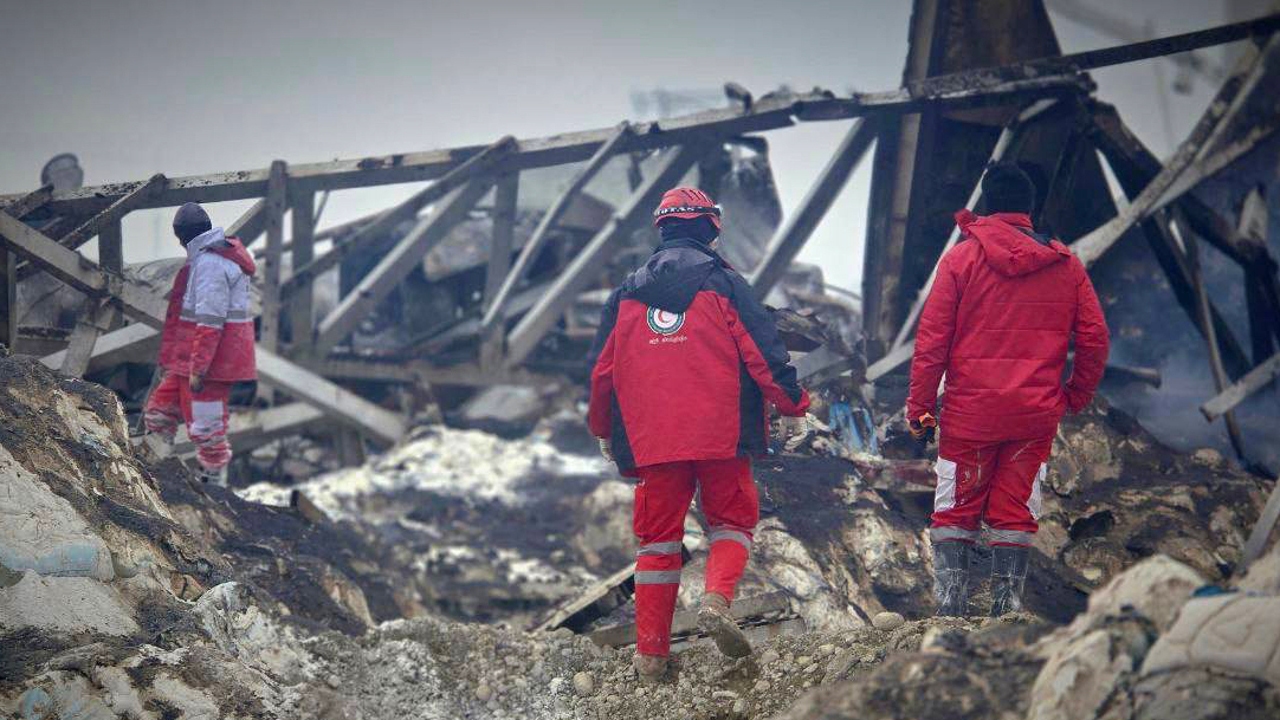
The military offensive by Israel and the United States against Iran reached its twelfth day this Wednesday and far from a near end in sight, the conflict remains without signs of negotiation while tension increases in the energy markets and political and military uncertainties multiply in the region.
The escalation of the war once again shook the price of oil this Wednesday, which once again suffered increases of close to 5% in the main international markets. Added to the military pressure is the risk of interruptions in maritime transport through the Strait of Hormuz, one of the most sensitive points for global energy trade.
In this context, contradictory messages between Western allies about the duration of the offensive add more uncertainty. While some leaders suggest that the campaign could end soon, others insist that the operation will continue until military objectives not yet publicly specified are achieved.
A war without a calendar
In recent days, the authorities of the United States and Israel have offered contradictory versions about the horizon of the conflict. The Israeli Minister of Defense, Israel Katz, affirmed this Wednesday that the offensive against Iran will continue “without a time limit” until it reaches “all the military objectives” and ensures victory in the campaign.
For his part, Donald Trump assured in an interview that the war could end “soon”, arguing that in Iran “there is practically nothing left to attack.”
His words contrast with the warnings of several European partners such as French President Emmanuel Macron, who maintained that Iranian military capacity “has not been reduced to zero,” questioning the idea of an immediate end to a war that could continue to escalate in other regional scenarios.
Hormuz, under pressure
The Strait of Hormuz has become one of the main sources of tension in the conflict. At least four merchant ships were attacked this Wednesday in this strategic passage, according to reports from the British agency UKMTO and Iranian sources.
Among the incidents was the impact of a projectile against a Greek-owned bulk carrier, whose captain reported that the crew was safe and sound. In another attack, the Iranian Revolutionary Guard claimed to have hit a Thai-flagged bulk carrier with 23 crew members, causing a fire on board and forcing the Oman Navy to rescue some of the crew.
The container ship was also attacked One Majesty, of the Japanese flag, and the ship Express RomeIsraeli owned and flying the Liberian flag. Tehran has reiterated that it will not allow “not one liter of oil” to cross the strait for the benefit of the United States, Israel or its allies.
The risk to maritime trade has led some European leaders to raise the possibility of escorting merchant ships, although Macron admitted that currently “the conditions are not met” to deploy a military mission in what he defined as “a war zone.”
Oil and power in Tehran
Faced with the threat to global energy supply, the countries of the International Energy Agency (IEA) have decided to release 400 million barrels of their strategic reserves, the largest volume used so far to face a supply crisis.
However, Iran has warned that such measures will not be enough to contain prices. According to Tehran, the pressure exerted on the Strait of Hormuz could push the barrel to $200 if the conflict continues.
The energy escalation coincides with another political unknown within Iran: the situation of the new supreme leader, Mojtaba Khamenei. The son of the late Ayatollah Ali Khamenei has not appeared publicly or broadcast messages since his appointment last Sunday, which has fueled rumors about his state of health.
Speculation arose after Iranian state television used the term “janbaz”, used to refer to wounded fighters, when reporting on his election. According to The New York TimesKhamenei would have suffered injuries to his legs on the first day of the war, information that has been denied by those around the Iranian president.
