
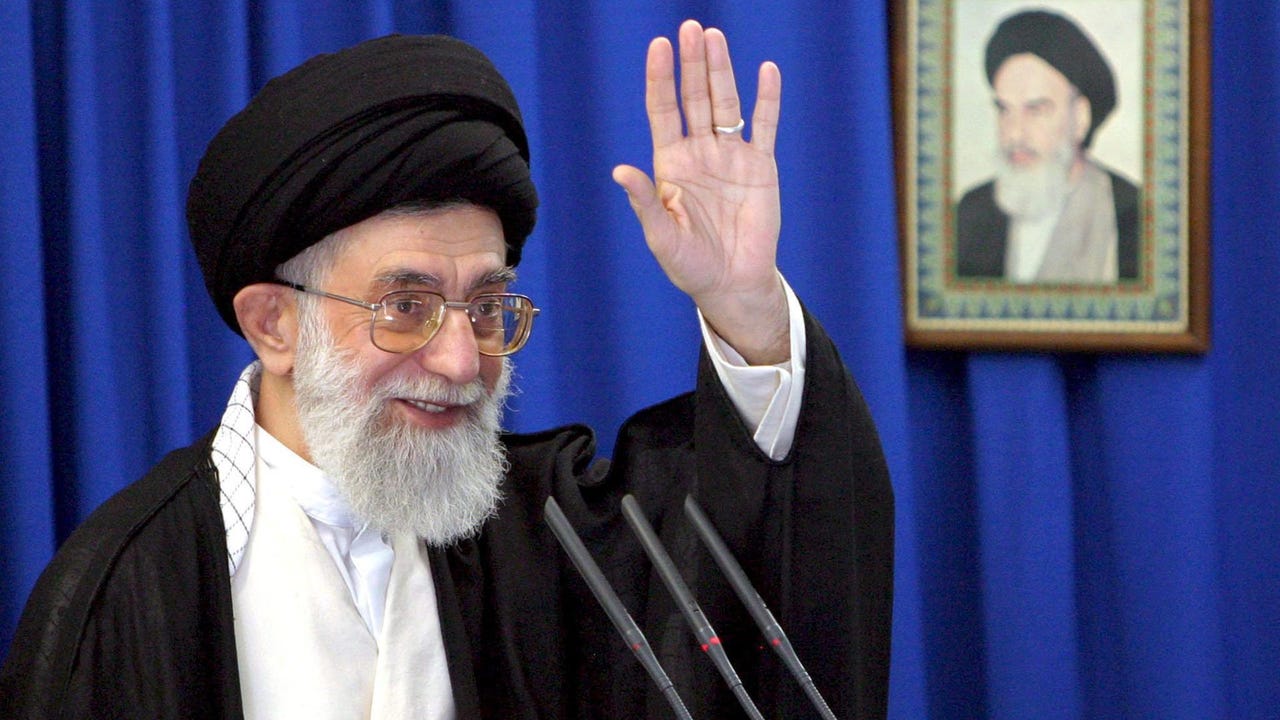
Iran’s public television has confirmed the death of Ayatollah Khamenei following the attacks by the United States and Israel on Iran. Previously, the American president, Donald Trump, had advanced it in a message on his social network Truth. “Khameneí, one of the most evil people in history, has died,” he said.
Although the United States and Israel have justified the attacks on Iran under the pretext of ending the Iranian nuclear plan, Trump went further and appealed to the Iranian people. “The hour of your freedom is at your fingertips. (…) When we are done, take the Government. It will be yours to take over.”
Came to power in 1981
Khamenei was born on July 17, 1939 in Mashad (Iran) and was the second in a family of eight children. He obtained the title of cleric at the age of 11 and was opposed to Shah Reza Pahlavi, the monarch who was overthrown by the Islamic Revolution of 1979. A year later he was appointed by Ayatollah Khomeini as leader of Friday prayers and in 1981 he was elected president. Already in 1989, Khomeini’s successor, who had died at the age of 86, was elected.
However, he almost died without being able to rise to power, since in 1981 he was the victim of an assassination attempt. During one of his conferences, an opposition group planted a bomb and caused him to lose mobility in his right arm. Even so, he spent several months on the front lines during the invasion of Iraq – months before the elections that made him president.
His enmity with the United States
The war with Iraq caused Khamenei to distrust the United States, which had shown its support for Iraq. Previously, tensions with the American country had increased, since the Iranian Revolution occurred as a result of the United States having given asylum to the overthrown Shah Reza Pahlavi.
After this, the US and Iran broke off relations and during the following years, there were moments of indirect war, sanctions against Iranian oil and energy sector and brief rapprochements, but never a normal relationship. In addition, the United States began to accuse Iran of supporting terrorist groups such as Hezbollah and Hamas.
The nuclear program
The climax came when then-President George Bush called Iran, Iraq and North Korea an “axis of evil” and accused Iran of possessing weapons of mass destruction. Khamenei, however, has always assured that his country used nuclear energy for peaceful purposes, and even issued a fatwa (Islamic law) against its development in 2003.
However, suspicions increased from the West and imposed sanctions against Iran, which greatly impoverished the country. In 2015, Khamenei signed a document with China, France, Germany, Russia, the United Kingdom and the United States to limit Iranian uranium enrichment. An agreement that the US broke during Trump’s first term.
In 2019, Trump announced new measures against Iran, as revenge for the downing of a US drone, prompting him in January 2020, in Khamenei’s first Friday prayer in eight years, to call US officials “American clowns.”
The deaths from covid, the 12-day war and the revolt of January 2026
With the arrival of covid-19, Khamenei banned the import of vaccines from the United States and Great Britain, considering them unreliable. A BBC investigation found in 2022 that the pandemic killed 300,000 people in Iran, more than double the official figure.
With the outbreak of the Ukraine war, Khamenei accused the United States of provoking it and compared the American government to a “mafia-like regime.” The Ayatollah disappeared from public life for a time, until he reappeared after the outbreak of the 12-day war with Israel in July 2025. He allegedly spent the days hiding in a bunker.
Repression, torture and thousands of deaths
The last internal conflict that it has had to face were the protests and riots that occurred in the country for two weeks in January 2026. Iran was cut off during that time, without internet or calls, and thousands of citizens died. In his opinion, it was Donald Trump’s fault for “openly encouraging” the Iranians in exchange for “military support.”
At no time did Khamenei make reference to the forces of repression that have characterized his mandate and with which he has repressed the protests and revolts that have occurred in the country over the years. For example, in 1999 it repressed student protests and women who did not wear the hijab in protest were tortured and confined.
In 2022, Mahsa Amini, a 22-year-old Kurdish woman arrested for not wearing the hijab, died. He was in police custody and subsequent riots led to 400 deaths, according to the US-based Iranian human rights agency Human Rights Activists News Agency (HRANA).
