
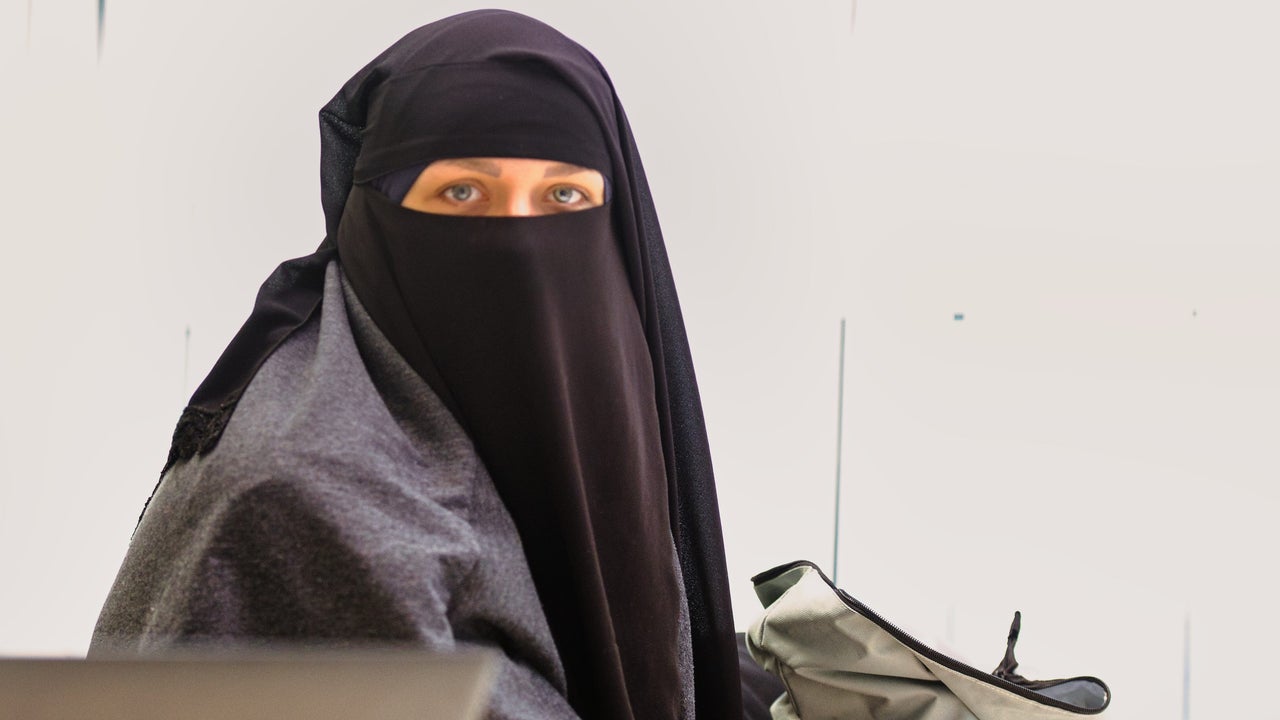
In 2011, France was the first European country to ban the burqa. Belgium, Austria, Denmark, Bulgaria and Switzerland followed. In all of them, the full veil is prohibited at the national level in public spaces, although Swiss law – endorsed by referendum – contemplates a good number of exceptions.
Other countries limit it in regions or certain spaces
There are also several countries in which it is only limited in some regions; or in some spaces. For example: The Netherlands prohibits it in schools, transport and hospitals. But in either case, the issue generates bitter debates. Those who oppose the ban argue that the ban restricts religious freedom, while many theorists remember that the burqa is not in the doctrine of Islam.
The burqa is an imposition of fundamentalist Islamists
The Professor of Law at the University of Lleida and specialist in religious diversity, María Teresa Areces, remembers that neither the Koran nor the Sunnah force women to wear the burqa, the chador, or the niqab. “What can be deduced from what the Koran and the Sunnah say is that women have to dress with decorum and modesty, but nothing more. This is an imposition of fundamentalist Islamists.”
What do European regulations say about the garment?
The European regulations against this garment appeal to security and the need to identify citizens and avoid entering into thorny aspects such as religion or non-discrimination. These aspects are what motivated an appeal against the French law before the European Court of Human Rights. The court ended up supporting it. And he ruled, establishing jurisprudence, that religious freedom is compatible with prohibiting the burqa if said prohibition guarantees social cohesion.
“Both France and Belgium argue that coexistence between citizens has to be possible and one of the ways citizens coexist is to look each other in the eyes. On the other hand, they allege that wearing the burqa can violate public order,” explains María Teresa Areces.
Sanctions for a man who forces a woman to wear a burqa
Several European laws include sanctions for the man who forces the woman to wear the garment. Beyond Europe, several Islamic countries have also taken action against the burqa. The closest to us is Morocco, which has banned its sale and manufacture for security reasons since 2017.
