
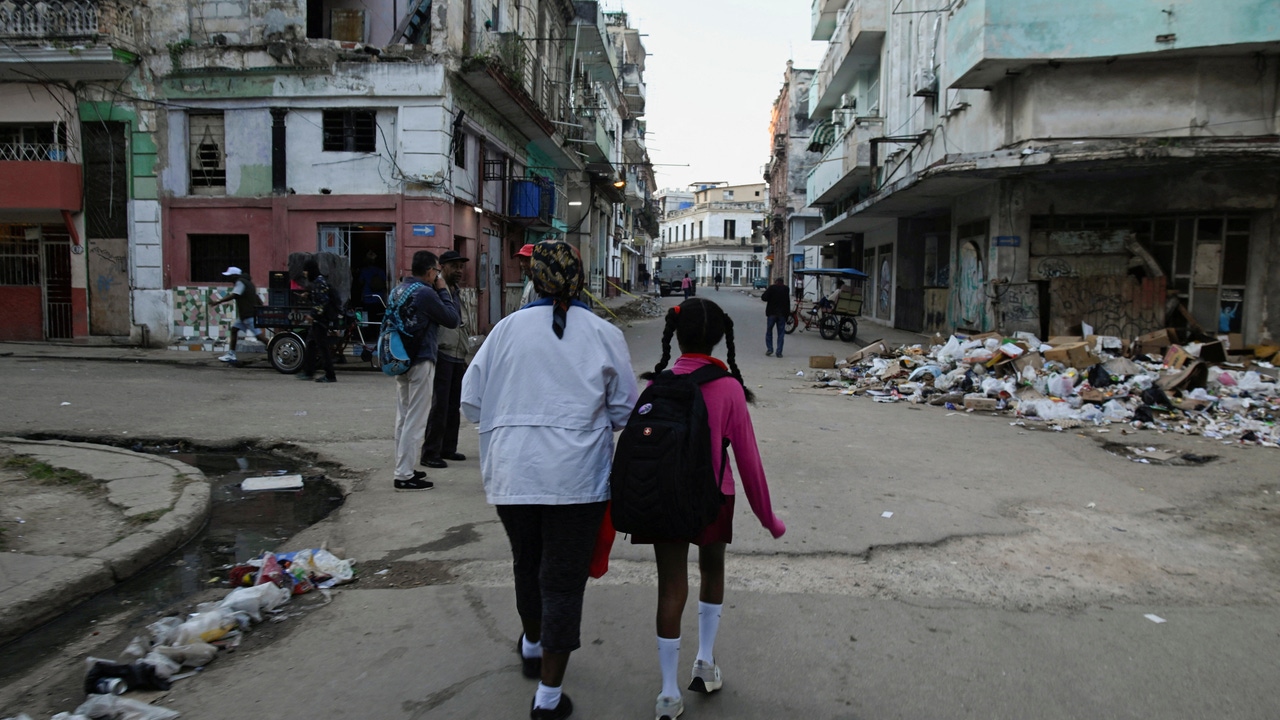
The situation on the island of Cuba is increasingly desperate for its inhabitants. Currently, it is going through one of the most delicate moments in its recent history and the oppressive fist of Donald Trump is not helping.
The lack of fuel is paralyzing flights, forcing the closure of hotels and causing multiple blackouts that have already left more than half of the country without electricity at peak times of the day. “The situation in Cuba is extremely precarious, possibly the worst since the special period experienced in the 90s, after the fall of the Soviet Union,” explain Blas Moreno and David Gómez in Julia on the wave.
And, although the island has been suffering from a fuel energy crisis for a long period, Moreno and Gómez assure that “it has worsened with the blockade of oil from Venezuela and Mexico.” Not to mention the figure of Trump, who has already threatened “to impose tariffs on those countries that want to send oil to Cuban soil.” This accumulation of factors represents “the perfect storm” to continue aggravating the situation.
Impact on tourism
Tourism is also affected, as fuel shortages have hit the aviation industry and, consequently, tourism. “The airlines of Russia and Canada have already announced that they are going to stop flying to Cuba due to the shortage of supply and the result is the cancellation of flights and the closure of hotels, which affects, by the way, the Spanish hotel sector, chains such as Meliá, Iberostar or Valentín that have a presence on the island,” they detail.
This being the case, the White House’s objective seems clear: to force the internal wear and tear of the system until it collapses. “The strategy is for Cuba to gradually degrade,” the experts point out. In fact, Miguel Díaz-Canel, the president of the island, assured last January that Cuba was a sovereign nation and that it was willing to defend the homeland to the last drop of blood. However, and following the latest events in the country, the president stated 15 days after these statements that he was willing to negotiate with the United States.
A closed regime
But Cuba’s problem is not only due to the United States. Moreno and Gómez remember in Julia in the wave that “the Cuban regime is closed and controlled by a military elite that prevents any type of political or economic opening (…) It is an island that is very frozen in time” for which perhaps “the time has come for a change.”
